EV News & Updates
Your daily source for the latest electric vehicle news, launches, reviews, and industry insights from India and around the world.
All News
56 articles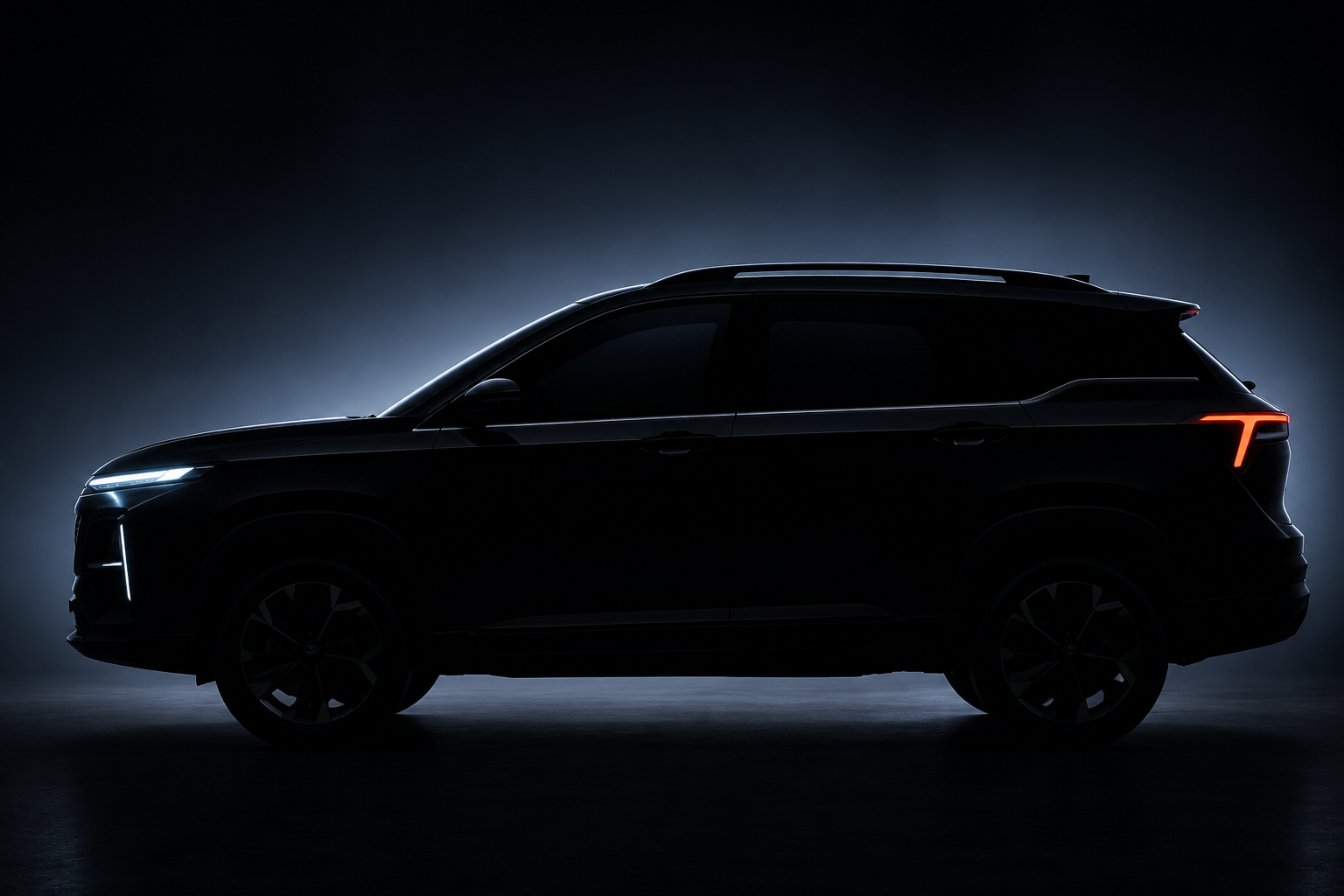
MG Hector Tomahawk EV: Aug 26 Launch, 530km Range
Key Takeaways • JSW MG Motor India released the first official teaser of its new three-row electric SUV on 13 August 2026, with the tagline “ADAPT takes its first electric form.” • The SUV is expected to be badged MG Hector Tomahawk. India debut: 26 August 2026. Pre-bookings are open at ₹21,000. • It is the first production model on MG’s new ADAPT platform, which supports BEV, PHEV, strong-hybrid and range-extender. • Expected powertrain: 69.2kWh LFP battery, single front motor with 201hp / 310Nm, and up to 530km of range. • Seven seats with a bench-style second row, confirmed by the teaser • Expected price: ₹18 lakh to ₹25 lakh (ex-showroom)
Home EV Charging Setup in India: Step-by-Step Guide (2026)
Quick Summary • Home charging is 70–80% cheaper than running a petrol car per kilometre • Two practical options: standard 15A socket (slow, free) or 7.2 kW wall box (fast, one-time cost) • A 7.4 kW wall box adds 35 to 40 km of range per hour. Fully charging a 40 kWh battery in 5–6 hours • Total cost for wall box + installation in India: ₹40,000 to ₹70,000 • Apartment owners need society NOC; independent house owners can install directly
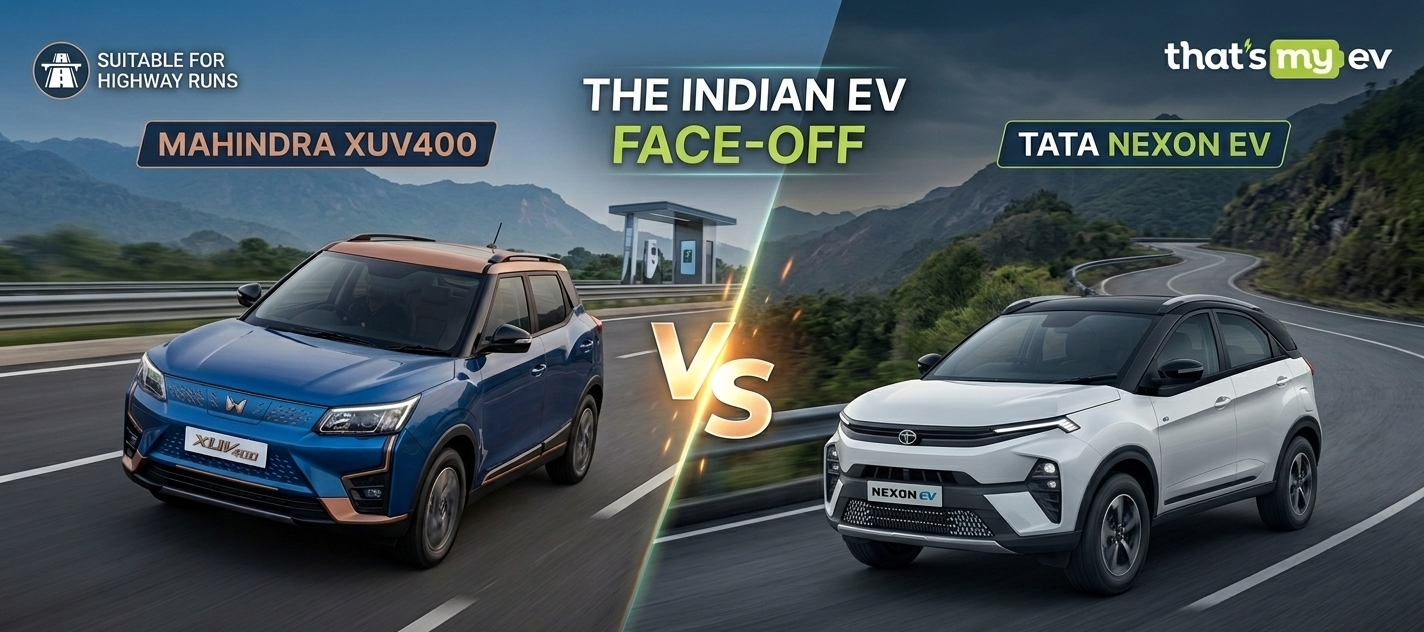
Mahindra XUV400 vs Nexon EV 2026
Quick Summary • Nexon EV starts at ₹12.49 lakh; XUV400 starts at ₹15.49 lakh. A ₹3 lakh gap at base • XUV400 is larger: 4,200 mm vs Nexon EV's 3,994 mm; 378L boot vs 350L • XUV400 has more power: 150 hp vs 127 hp; more torque: 310 Nm vs 215 Nm • Nexon EV wins on: 5-star NCAP safety, V2L charging, more features on top spec, better service network • XUV400 wins on: Larger cabin and rear seat space, higher ground clearance, one-pedal driving capability • Both support 50 kW DC fast charging and 7.2 kW wall box chargers
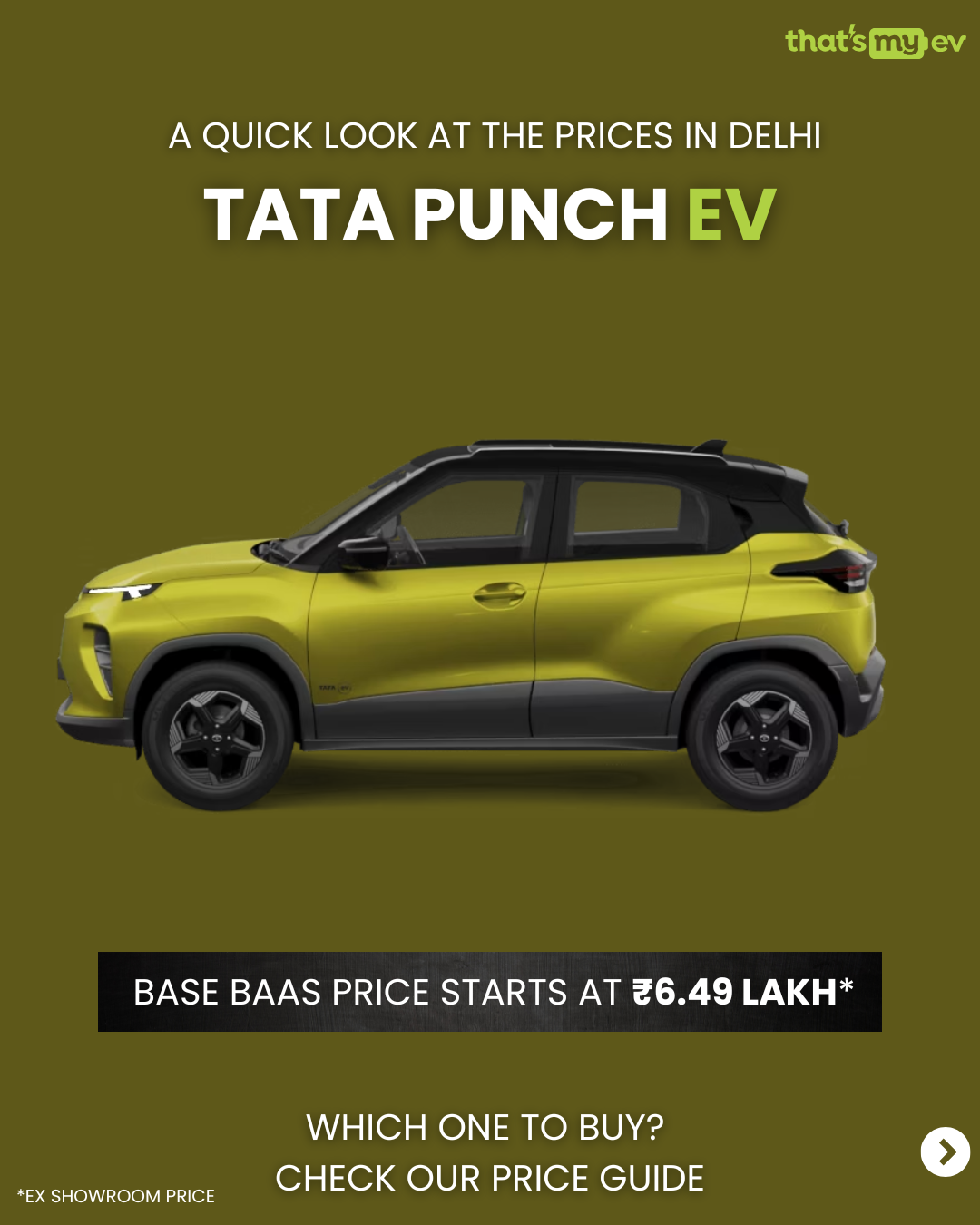
Tata Punch EV Price Breakdown: Regular vs BAAS Explained
Tata Punch EV pricing = 2 options Regular: ₹10.24L – ₹13.43L BAAS: ₹6.49L + ₹2.6/km Low upfront vs long-term cost.
Freelander Concept 97 Unveiled: JLR x Chery EV With Huawei & 360 kW Charging
JLR and Chinese automaker Chery have just unveiled the Freelander Concept 97 at a debut event in China. It's a concept, so production is not confirmed yet. But what's been revealed is interesting enough that it deserves a proper look.
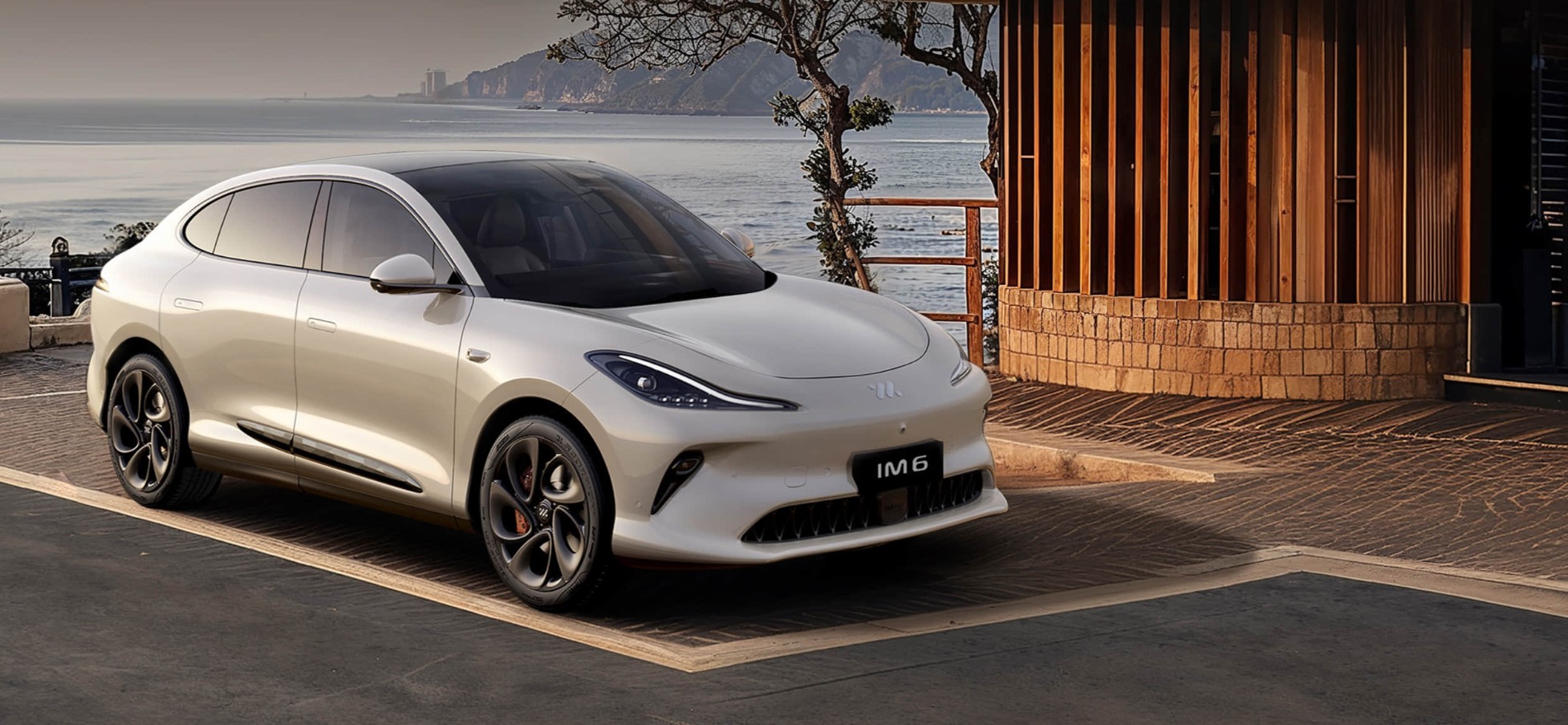
MG Motor India is Set to Bring the IM6 to India
0–100 kmph in 3.5 seconds 625 km of range Ultra-fast charging — 10% to 80% in under 18 minutes Active Road Noise Cancellation 30-litre expandable storage + 665L boot space Rainy Night Mode — AI vision that sees through bad weather Level 3 autonomous driving with LIDAR
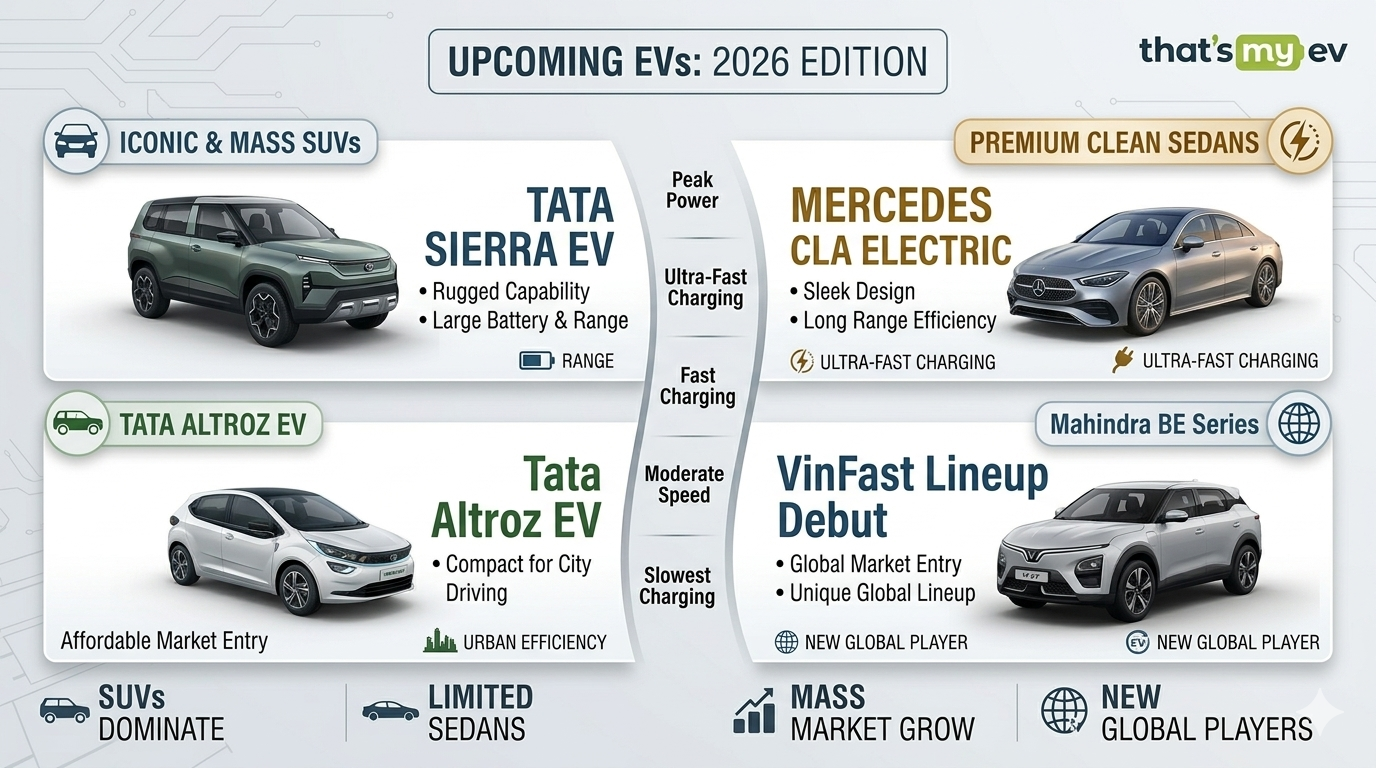
Upcoming EVs India 2026 Launches
Quick Summary • Major upcoming EVs in 2026: Toyota Urban Cruiser EBELLA, Mercedes-Benz CLA Electric, Tata Safari EV, Tata Sierra EV, Hyundai Inster • Budget segment additions expected from Tata (Altroz EV) and Maruti • Premium segment: Mercedes CLA Electric, BMW iX3, Audi Q4 e-tron • Several launches from VinFast, BYD, and Mahindra's expanded lineup • SUVs dominate the pipeline, though sedan EV launches are limited but notable
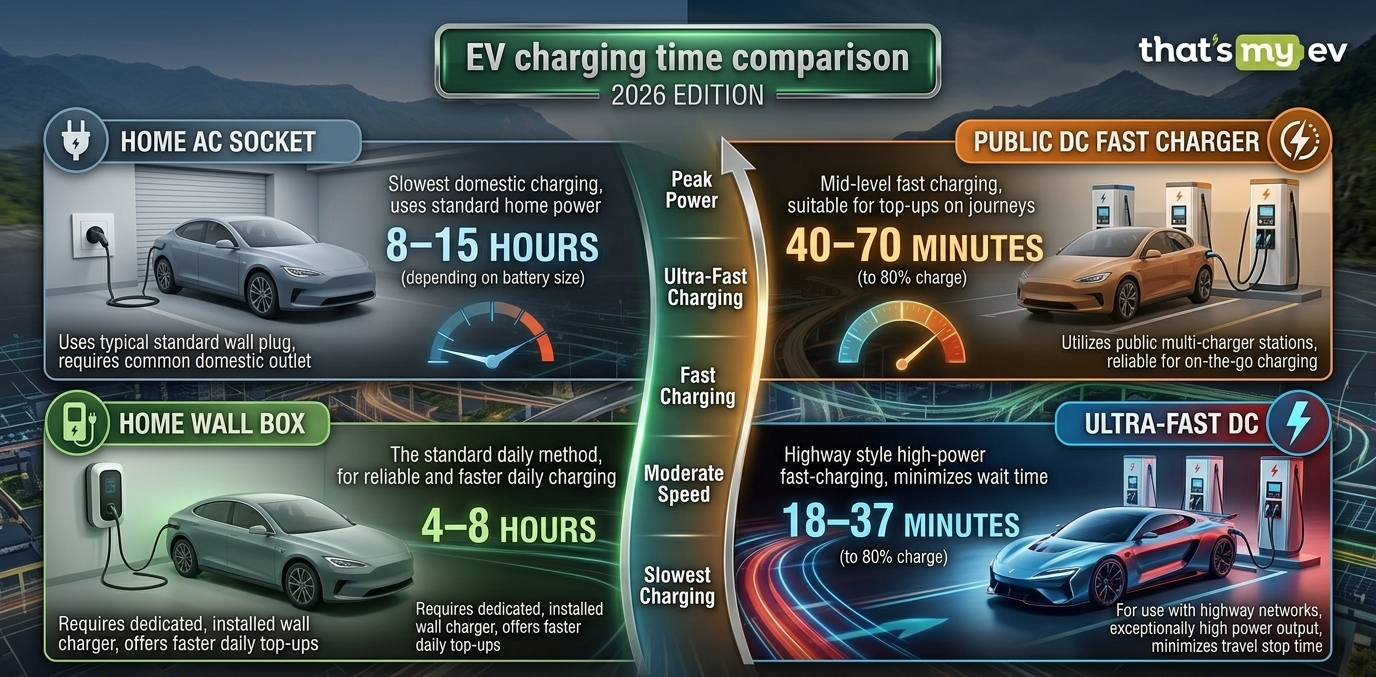
EV Charging Time Comparison India
Quick Summary • Home AC charging (3.3 kW socket): 8–15 hours depending on battery size • Home wall box (7.2 kW): 4–8 hours, the standard daily charging method • Public DC fast charger (50–80 kW): 40–70 minutes to 80% • Ultra-fast DC (150–350 kW): 18–37 minutes to 80% • The fastest charging EV in India: Kia EV6, 18 minutes from 10–80% on a 350 kW charger • Practical rule: Charge to 80% daily at home, save DC fast charging for road trips
Honda is road testing its first electric SUV in India
Honda Cars India just flagged off the pan-India road testing of the Honda 0 Alpha. Their first ever pure electric SUV for India.
MG ZS EV Review (2026): Real-World Range, Features & Should You Buy It?
Quick Summary Price: ₹17.99 lakh to ₹20.50 lakh ex-showroom; on-road in Delhi starts at ₹19.05 lakh Single 50.3 kWh battery across all variants; claimed range 461 km Real-world range: 300–350 km in city conditions with AC, when you drive in eco mode. Features: ADAS, dual-screen dashboard, panoramic sunroof on top variants Best suited for: Daily family use, highway-capable, buyers who want premium feel without crossing ₹21L
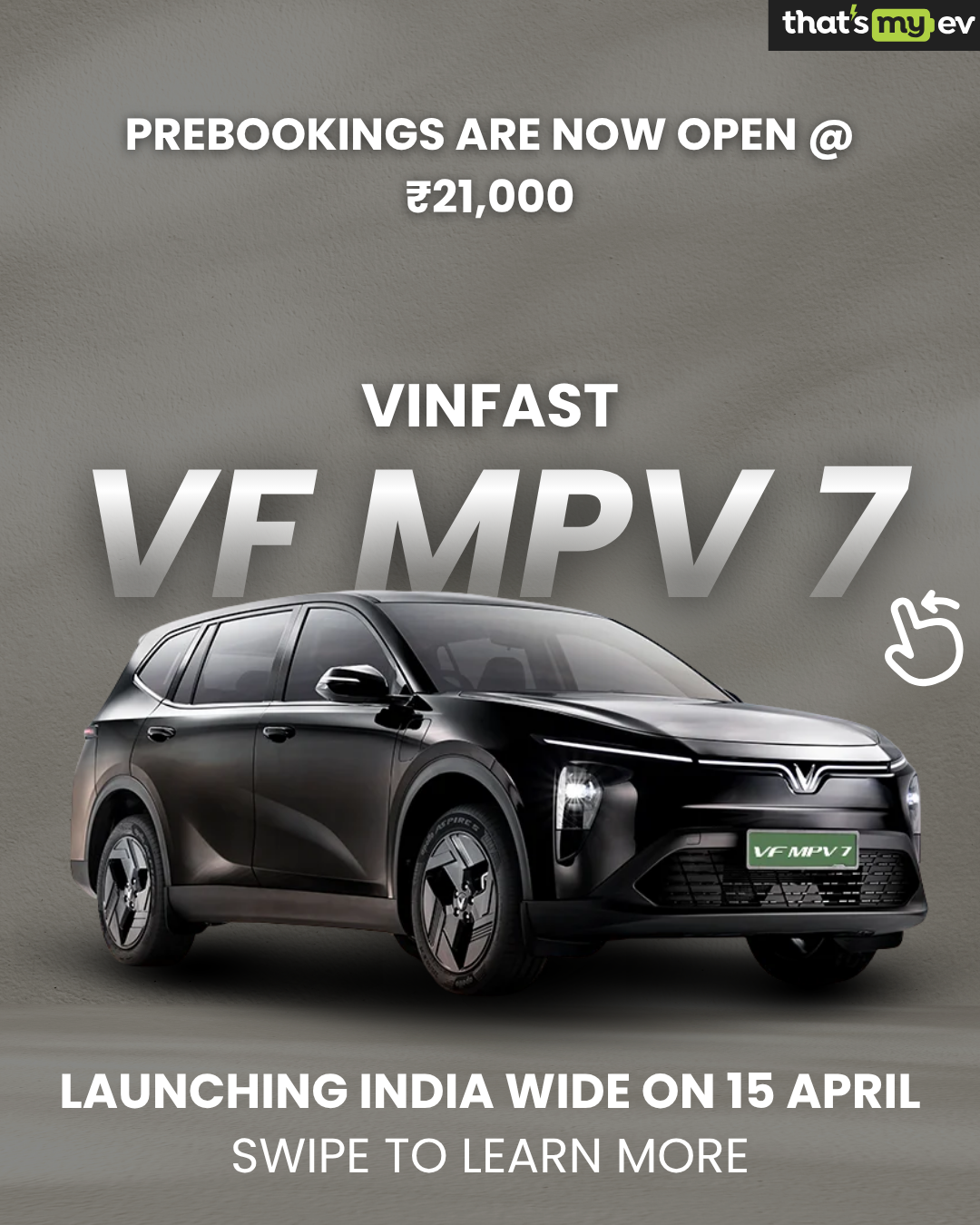
VinFast VF MPV 7 India Launch on 15 April: Everything You Need to Know
VinFast announced its third EV for India bound launch On 15 April 2026, VinFast is launching the VF MPV 7 across India. Prebookings are already open at ₹21,000. And for the first time in a long while, the electric MPV segment in India has something worth talking about.
Should You Buy an EV in India in 2026? The Honest Decision Guide
Quick Summary • Buy an EV if you drive over 1,000–1,200 km per month, have home charging access, and plan to keep the car 4–5 years • Don't buy yet if you can't charge at home, or drive long highway distances regularly • EVs convert around 85–90% of electrical energy to motion vs 17–21% for petrol engines • The financial case is strong for city commuters; the practical case is still evolving for highway-heavy users • 2026 is arguably the best year yet to go electric in India
Fast Charging vs Slow Charging for EVs in India: What's the Difference & Which Should You Use?
Quick Summary • AC charging converts grid power inside the car's on-board charger; DC fast charging it directly to the battery, bypassing the on-board charger • Slow AC charging: 3–7 kW, takes 8 to 12 hours for a full charge, ideal for overnight home use • Fast AC (wall box): up to 22 kW, takes 4 to 6 hours, best for home or workplace charging • DC fast charging: 30 kW & above, charges to 80% in 20 to 60 minutes, built for highways • Regular DC fast charging accelerates battery degradation
Government EV Subsidies in India 2026: Scheme and Benefit Explained
Quick Summary • GST on electric vehicles is 5%, compared to 28% + cess on petrol and diesel cars. The single biggest tax advantage • Central scheme PM E-DRIVE replaced FAME II in October 2024. Primarily focused on 2-wheelers, 3-wheelers, buses, and charging infrastructure • Private 4-wheeler buyers benefit mostly through GST, state road tax exemptions, and registration fee waivers • Delhi's EV policy offers some of the most aggressive state-level benefits in the country
EV Charging Cost in India vs Petrol: Full Breakdown (2026)
Quick Summary • Home EV charging: ₹1–₹1.5 per km • Public DC fast charging: ₹3.5–₹5.5 per km • Petrol car running cost: ₹5.5–₹7 per km • EVs cost between ₹0.80 and ₹1.5 per km, depending on charging method — petrol cars cost ₹5.5–₹6 per km • Annual savings for a 1,200 km/month driver: ₹80,000–₹1,00,000
Tata Nexon EV vs Punch EV vs Tiago EV: Which One Should You Actually Buy? (2026)
Quick Summary • Tiago EV starts at ₹7.99L, Punch EV at ₹9.99L, Nexon EV at ₹12.49L — Tiago is the most affordable of the three • Tiago: city hatchback, smaller battery, enough for daily 50 km commute • Punch: SUV stance, bigger battery, better real-world range, best value • Nexon: largest battery, most features, ADAS, panoramic sunroof — family car • All three get 6 airbags and Tata's Z-EV charging network access