EV Reviews & Opinions
Long-form expert reviews, deep-dives, and buying guides for India's electric vehicle scene. For breaking updates, see EV News.
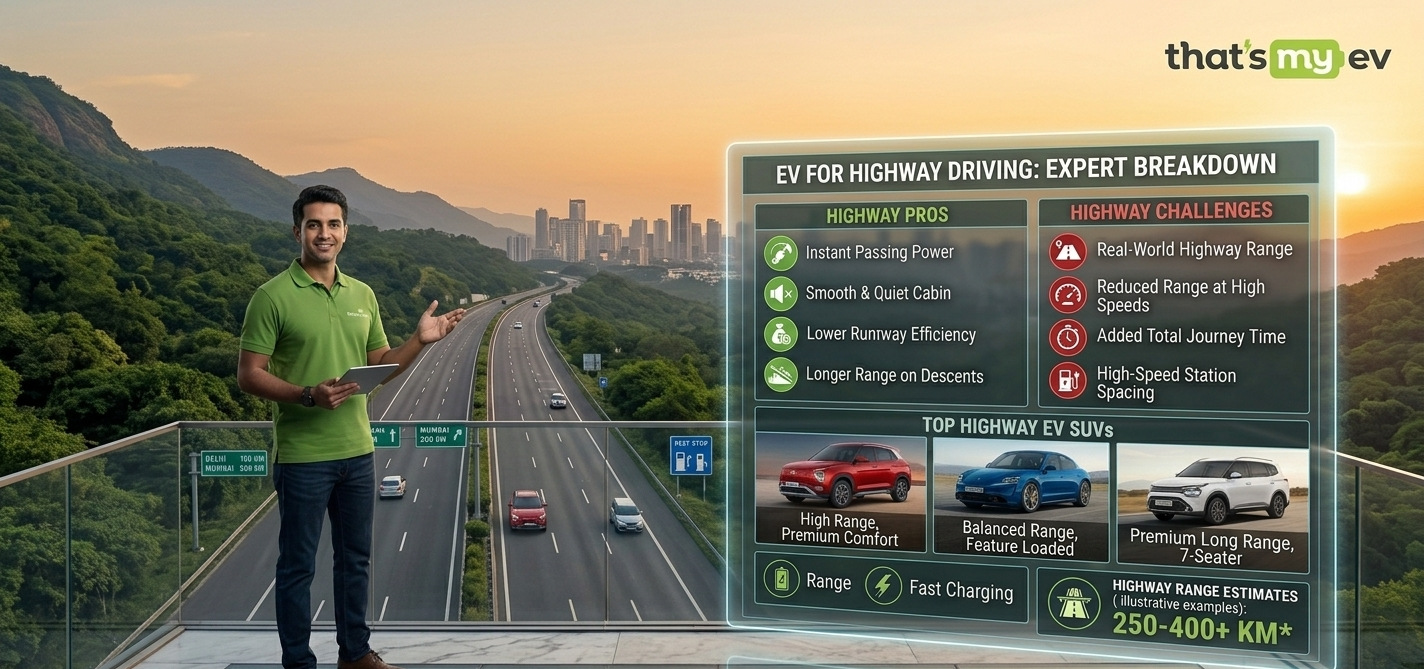
Is EV Good for Highway Driving India
Quick Summary • Highway EV driving is now practical on major corridors: NH48, NH44, and the Yamuna Expressway all have adequate DC charging • Real-world range on Indian highways is typically 20–25% lower than ARAI figures due to AC usage and speeds above 100 km/h • EVs with 400+ km real-world range handle most highway trips without stress • EVs with 200–300 km range require more careful planning for trips beyond 200 km • Fast charging speed matters more than total range on highway trips
Read more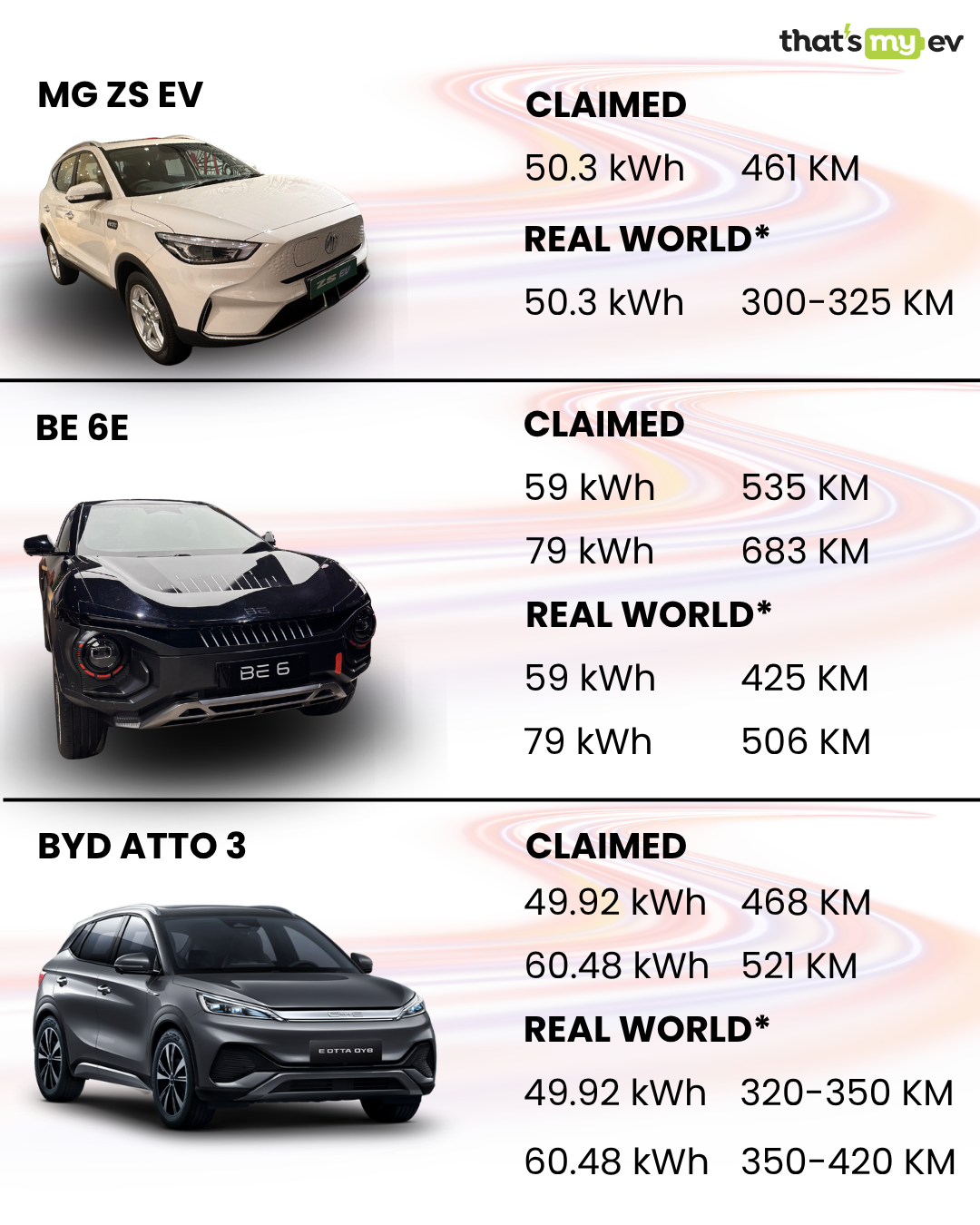
EV Range Comparison: BYD Atto 3 vs Mahindra BE 6 vs MG ZS EV
Claimed Range Comparison 1. MG ZS EV – Claimed range: 461 km Real-world range: 300~325km 1. BYD Atto 3 – Claimed range: 468 km for 49.92kwh pack, 521km for 60.48kwh pack Real-world range: 320~350km for 49.92kwh pack, 350~420km for 60.48kwh pack Mahindra BE 6 – Claimed range: 535 km for 59kwh pack, 683km for 79kwh pack Real-world range: 425km for 59kwh pack, 506km for 79kwh pack
Read moreBest EV Hatchbacks in India (2026): Every Option Worth Buying
Quick Summary • Three serious EV hatchbacks in India in 2026: Tata Tiago EV, Citroen eC3, and MG Comet EV • Tiago EV leads on features, brand trust, and service network • eC3 leads on space and boot capacity • Comet EV is a different category entirely. Urban micro-mobility, not a hatchback replacement • All three are city-focused with real-world range under 250 km • For buyers who need more range, the step up to Nexon EV at ₹12.49L is well worth considering
Read more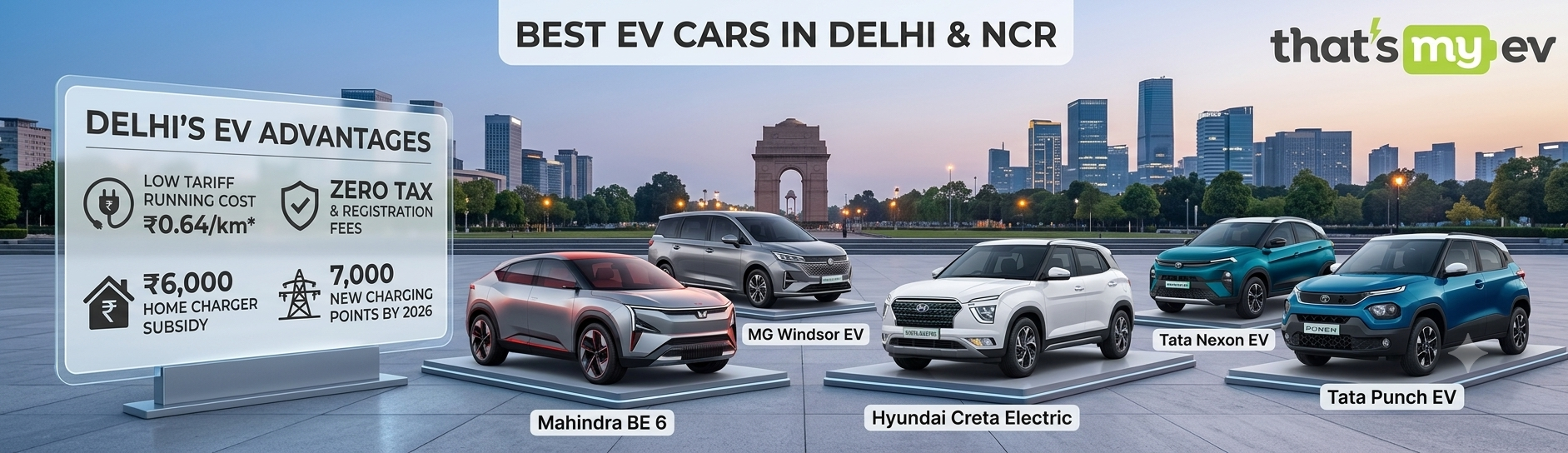
Best EVs to Buy in Delhi NCR (2026): Guide for Delhi EV Buyers
Quick Summary • Delhi's EV tariff is ₹4.5 per unit, giving a running cost as low as ₹0.64 per km • 100% road tax and registration fee exemption on EVs in Delhi • ₹6,000 subsidy on home charger installation for Delhi residents • Delhi Government target: 7,000 new charging points in 2026 • Recommended EVs for Delhi: Tata Nexon EV, Punch EV, Mahindra BE 6, MG Windsor EV, and Hyundai Creta Electric • Highway connectivity: Delhi-Jaipur, Delhi-Agra, Delhi-Chandigarh all have functional DC charging
Read more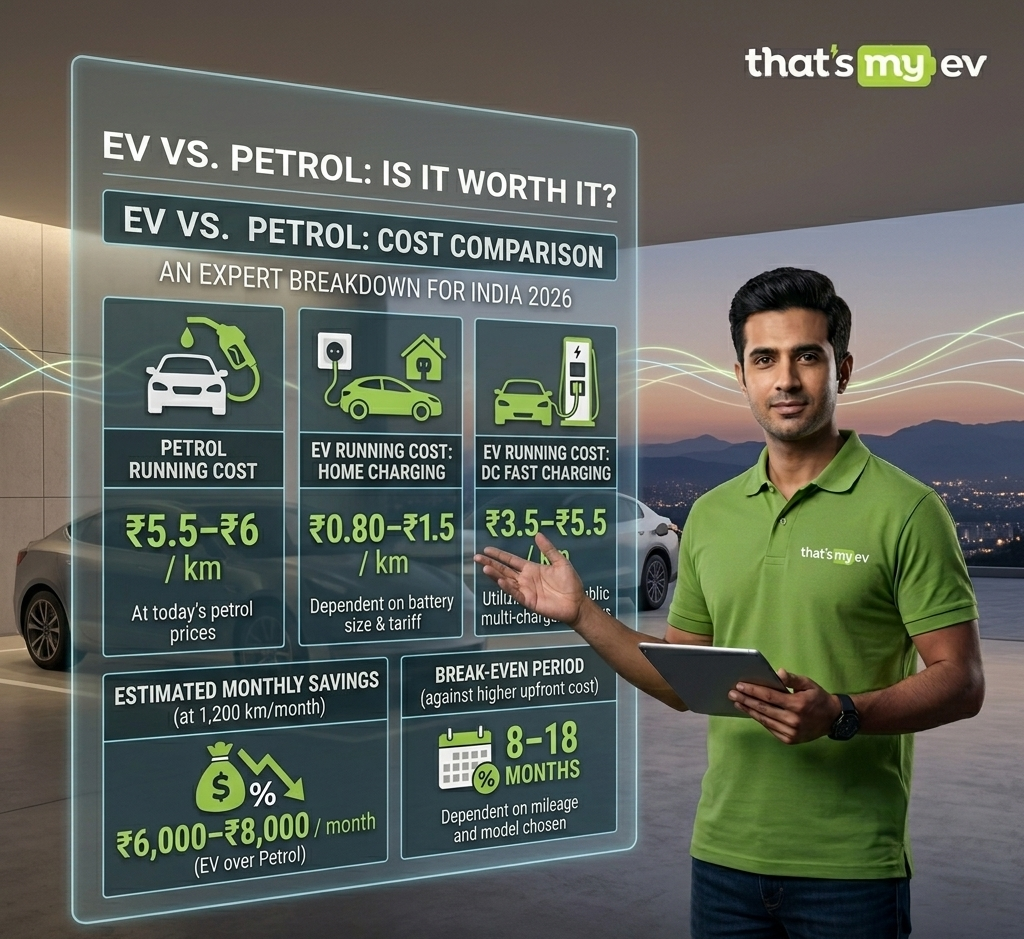
EV vs Petrol Cost Per KM India 2026
Quick Summary • Petrol car running cost: ₹5.5–₹6 per km at today's petrol prices • EV running cost (home charging): ₹0.80–₹1.5 per km, depending on battery size and electricity tariff • EV running cost (DC fast charging): ₹3.5–₹5.5 per km • At 1,200 km/month, an EV saves ₹6,000–₹8,000 per month over petrol • Break-even period against the higher upfront EV cost: 8–18 months, depending on mileage and model
Read more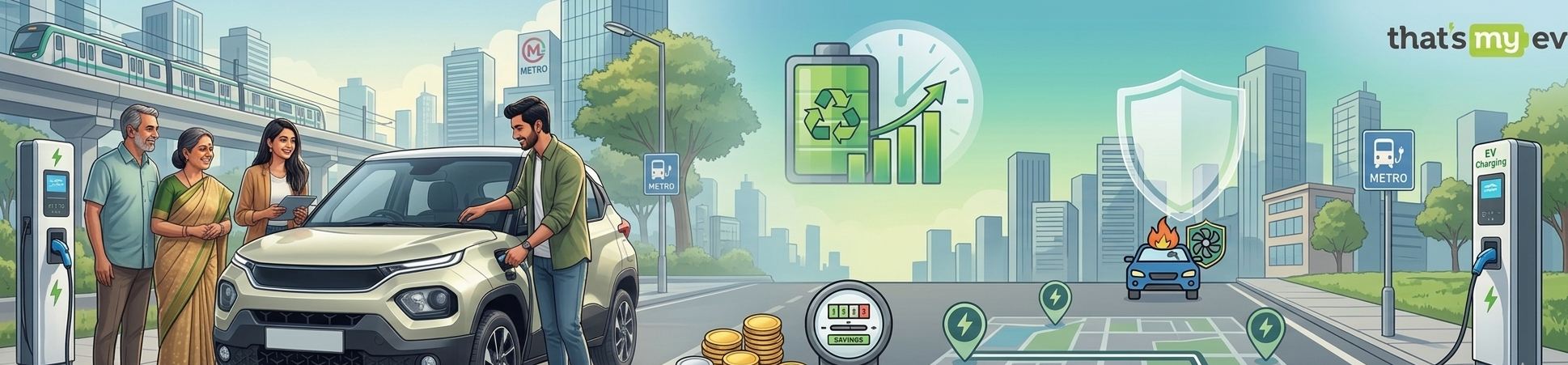
EV Myths in India Busted (2026): Battery, Fire Risk, Cost & Range Anxiety — The Truth
Quick Summary • EV fires are significantly rarer than petrol car fires, not more common • Modern EV batteries last 15–20 years with gradual range loss, not sudden failure • 75% of Indian commuters drive under 35 km a day. Range anxiety is largely irrelevant for this group • EV battery costs have fallen by over 85% in the past decade. EVs are becoming price-competitive with petrol cars faster than expected • EVs cost 60–70% less to maintain annually than petrol cars
Read more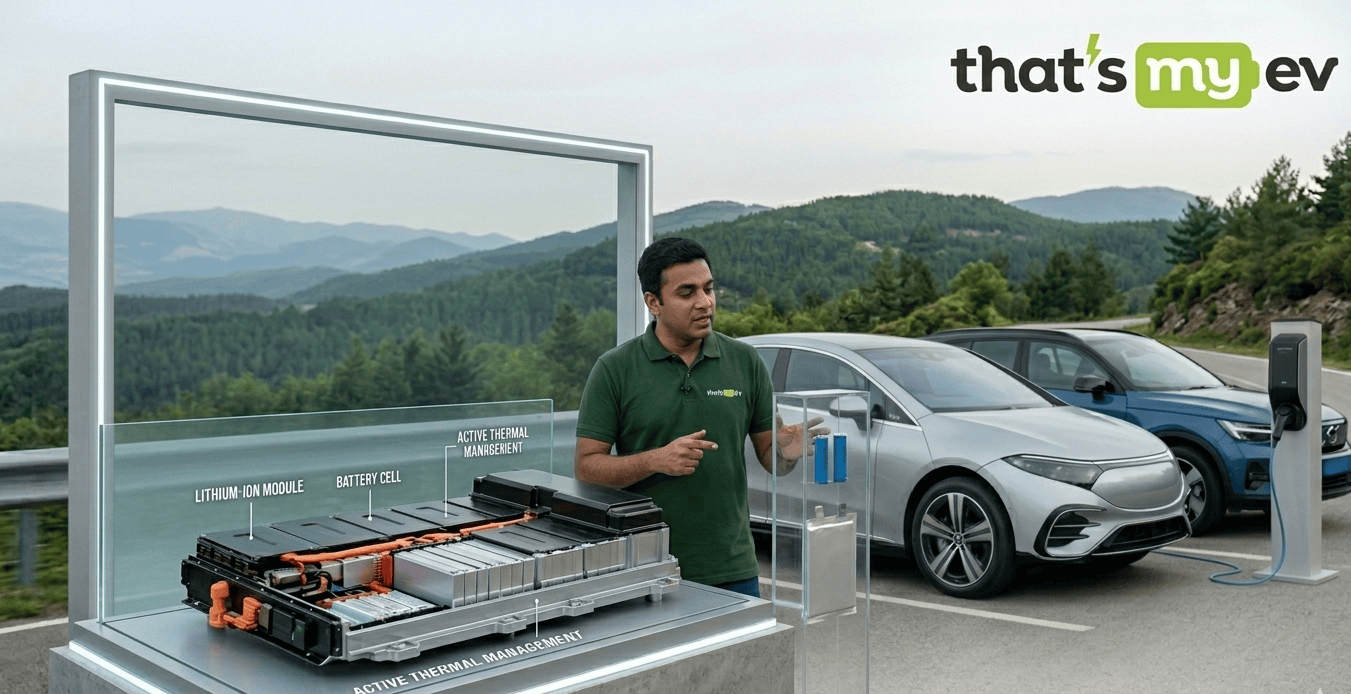
EV Battery Replacement Cost India
Quick Summary • A 1 kWh battery pack costs approximately ₹15,000–₹20,000 in India, so a 40 kWh pack costs ₹6–8 lakh to replace • All major manufacturers: Tata, MG, Mahindra, Kia and Hyundai offer 8-year battery warranties • Most EV batteries last 8–10 years or 1.6–2 lakh km before degradation becomes significant • Most owners won't need a replacement within the warranty period under normal use • Battery prices are falling and expected to drop significantly by 2028–2030
Read moreBYD Seal Review India 2026
Quick Summary • Priced from ₹41 lakh (Dynamic) to ₹53.15 lakh (Performance); three variants with 61.44 kWh and 82.56 kWh battery options • Claimed range: 510 km (Dynamic), 650 km (Premium), 580 km (Performance); real-world mixed driving delivers approximately 490 km • 150 kW DC fast charging. From 10–80% in 37 minutes; 30–80% in just 26 minutes • Five-star Euro NCAP and ANCAP safety rating; 9 airbags; Level 2 ADAS as standard • Ground clearance of 145 mm. The limitation for Indian road condition
Read moreBest EV Cars Under ₹20 Lakh in India (2026): Every Option Worth Buying
Quick Summary • The most popular EVs under ₹20 lakh in 2026: Tata Punch EV (₹9.69L), Maruti e Vitara (₹15.99L), Mahindra BE 6 (₹18.90L), MG Windsor EV (₹14L), and Hyundai Creta Electric • Best under ₹10L: Tata Punch EV • Best ₹10–15L: Tata Nexon EV or MG Windsor EV • Best ₹15–20L: Mahindra BE 6 (Pack One) or Maruti e Vitara • New entrants like the Windsor EV and VinFast VF 6 are adding strong competition to mid-range • Range, fast charging, and service network are the 3 filters that matter most
Read more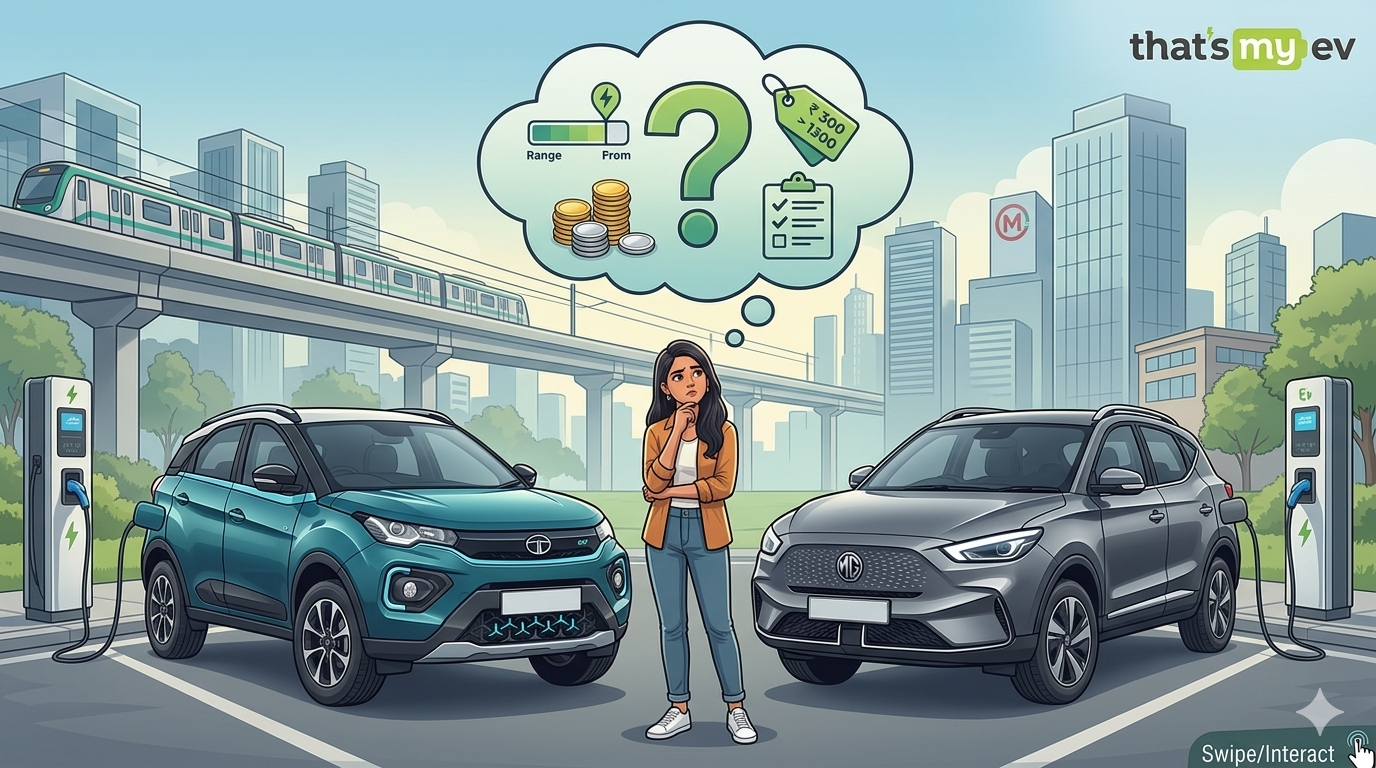
Tata Nexon EV vs MG ZS EV (2026): The Most Detailed Comparison You'll Find
Quick Summary • Nexon EV starts at ₹12.49 lakh; ZS EV starts at ₹17.99 lakh, ₹5.5 lakh base price gap • ZS EV claims 461 km ARAI range on a single 50.3 kWh pack; Nexon EV offers 30 kWh and 45 kWh battery options with up to 489 km claimed range • ZS EV produces 174 hp and 280 Nm; Nexon EV produces 127 hp and 215 Nm • Nexon EV has a 5-star Global NCAP rating; ZS EV has not been crash tested in India • ZS EV wins on interior, ride quality, and range; Nexon EV on price, safety, and ground clearance
Read moreMG Comet EV Review (2026): India's Boldest City Car, Is It Actually Worth It?
Quick Summary • Priced between ₹7.50–₹9.97 lakh ex-showroom, the Comet undercuts rivals like the Tiago EV • 17.3 kWh LFP battery, 42 hp rear motor; ARAI claimed range 230 km, real-world city range 180–200 km • 4.2 metre turning radius. One of the tightest of any car in India • No DC fast charging. Charges fully in 5–7 hours on AC; the biggest limitation • Best suited as a secondary vehicle or a solo urban commuter's primary car • 8-year/1.2 lakh km battery warranty; BaaS pricing available
Read more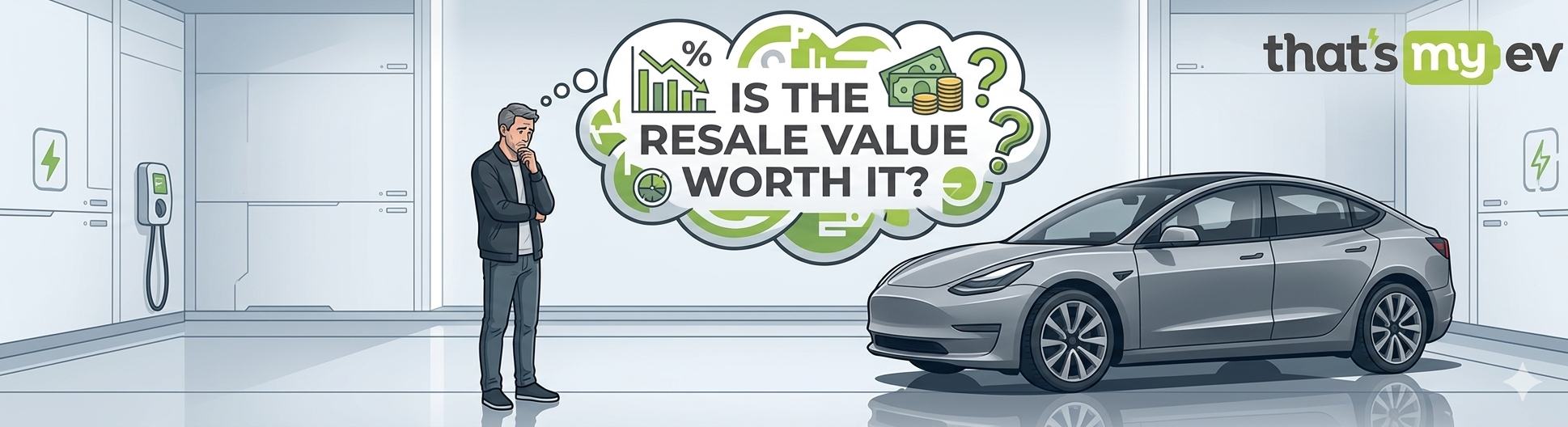
EV Resale Value in India (2026): The Honest Truth Every Buyer Should Know
Quick Summary EV depreciation in the first year runs 25–30%, higher than petrol cars A 2020 EV retains roughly 46% of its original price today, versus 58% for an equivalent petrol car, a big gap Battery health and certification standards are now the primary drivers of used EV value The used EV market is in its earliest stage; the first mainstream EV cohorts from 2020–2023 are only now hitting the secondary market • Despite lower resale prices, used EVs offer exceptional value to the second buyer
Read moreEV Maintenance Cost vs Petrol Cars in India (2026): The Real Numbers
Quick Summary • EVs cost 60–70% less to maintain annually, typically ₹3,000–₹5,000 vs ₹10,000–₹15,000 for petrol cars • No engine oil changes, no spark plugs, no clutch, no exhaust servicing • EV brake pads last significantly longer due to regenerative braking • Battery replacement cost is ₹4–₹8 lakh, but most owners won't need this within the 8-year warranty period • EV insurance costs slightly more, the one area where petrol cars have an edge
Read more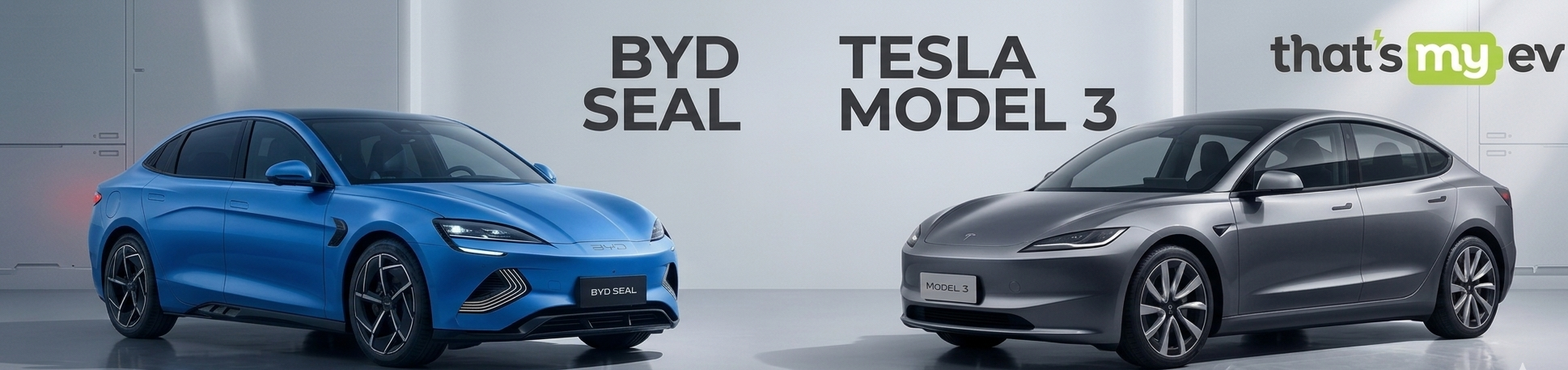
BYD Seal vs Tesla Model 3 in India (2026): Which Premium EV Should You Buy?
Quick Summary • BYD Seal starts at ₹41 lakh; Tesla Model 3 starts at ₹60 lakh, a ₹19 lakh gap at base level • Tesla Model 3 makes more power at 460 hp vs BYD Seal's 308 hp • Tesla wins on range and charging speed; BYD Seal wins on interior comfort, physical controls, and value • Tesla has no Supercharger network in India yet, the charging infrastructure advantage doesn't transfer • BYD Seal has Blade Battery LFP technology: better suited to Indian heat than Tesla's NMC chemistry
Read moreBest EVs for City Driving in India (2026): Top Picks for Every Budget
Quick Summary • City driving favours compact dimensions, good turning radius, strong real-world range for 40–80 km/day, and home charging compatibility • Best budget city EV (under ₹10L): MG Comet EV • Best value city EV (₹10–15L): Tata Punch EV • Best all-rounder for city families: MG Windsor EV • Best city EV with premium feel: Hyundai Creta Electric • Tata Tiago EV and Punch EV are ideal for city driving due to compact size, strong range, and agile handling
Read more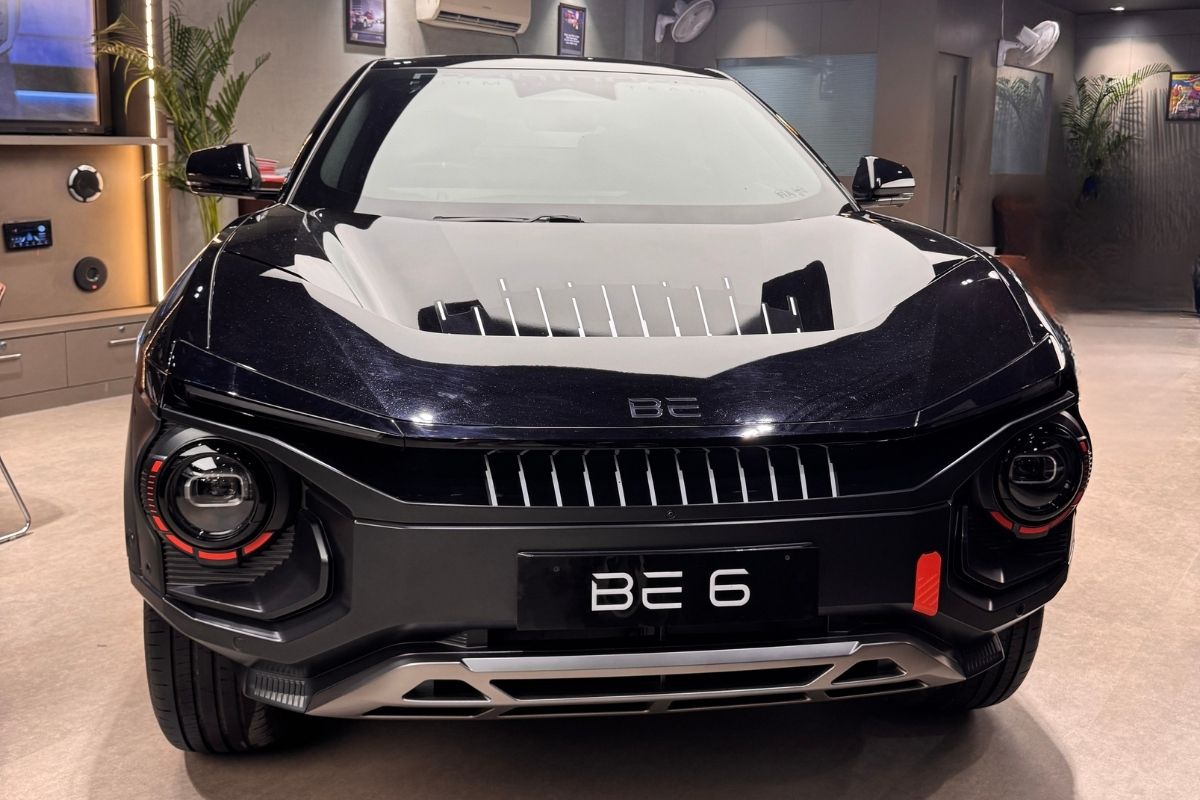
Mahindra BE 6 Review (2026): Is India's Boldest EV Actually Worth It?
Quick Summary • Priced from ₹18.90 lakh to ₹26.90 lakh (ex-showroom) across five variants • Two battery options: 59 kWh and 79 kWh • Real-world range: 506 km (79 kWh), 425 km (59 kWh) • 0–100 km/h in 6.7 seconds; 20–80% fast charge in under 20 minutes on a 175 kW DC charger • Three screens, AR HUD (heads up display), 16-speaker sound system, dual-zone climate control, fixed glass roof • Honest cons: rear seat comfort is compromised, coupe roofline limits headroom for tall occupants
Read moreEV vs Hybrid Cars in India (2026): Which One Should You Actually Buy?
Quick Summary • Hybrids don't need charging. They self-charge using the engine and regenerative braking • EVs cost ₹1–₹1.5 per km to run vs ₹7–₹9 per km for petrol. Hybrids sit in between at roughly ₹3–₹4 per km • EVs win on running cost and maintenance simplicity; hybrids win on flexibility and range without charging dependency • The right answer depends entirely on driving pattern, not ideology • Over a long period, EVs with lower running costs outperform hybrids on total cost of ownership
Read moreTata Punch EV (2026) Full Breakdown: Features, Range & Which Variant to Buy
Quick Summary • Prices start at ₹9.69 lakh (ex-showroom), going up to ₹12.59 lakh, with BaaS pricing starting at ₹6.49 lakh • Two battery options: 30 kWh and 40 kWh, increased by 5 kWh each over the previous model • ARAI range of 468 km (40 kWh); real-world C75 range of ~355 km • 20–80% charge in 26 minutes on a 65 kW DC fast charger; 135 km added in 15 minutes • Lifetime HV battery warranty on the 40 kWh variant. A first in this segment
Read moreTop Long-Range EVs in India with 400 km+ Real-World Range (2026)
Quick Summary • By 2026, a real-world range of 300 to 400 km is considered an acceptable norm for Indian conditions; 400+ km puts you in genuine highway-capable territory • Five EVs comfortably cross this threshold in India: Mahindra BE 6, Mahindra XEV 9e, BYD Atto 3 (top variant), Kia EV6, and Hyundai Ioniq 5 • The Hyundai Creta Electric and MG Windsor EV also come close, with ARAI ranges of 390–510 km and real-world figures touching 350–380 km
Read moreBYD Atto 3 vs MG ZS EV: Which One Should You Actually Buy? (2026)
Quick Summary • MG ZS EV starts at ₹17.99 lakh; BYD Atto 3 starts at ₹24.99 lakh. ₹7 lakh gap at base level • Atto 3 offers two battery packs (49.92 kWh and 60.48 kWh); ZS EV comes with a single 50.3 kWh pack • Atto 3 produces 204 hp and 310 Nm; ZS EV produces 177 hp and 280 Nm • MG has a wider service network in India; BYD is catching up but still lags outside metros • ZS EV: familiar, affordable, proven. Atto 3: more premium, more range, more performance
Read moreWe'd like to use Meta advertising cookies to measure how our ads perform. You can change this anytime from "Cookie settings" in the footer. Cookie Policy