Is an EV Good for Highway Driving in India? The Honest Answer (2026)
Quick Summary
Highway EV driving is now practical on major corridors: NH48, NH44, and the Yamuna Expressway all have adequate DC charging
Real-world range on Indian highways is typically 20–25% lower than ARAI figures due to AC usage and speeds above 100 km/h
EVs with 400+ km real-world range handle most highway trips without stress
EVs with 200–300 km range require more careful planning for trips beyond 200 km
Fast charging speed matters more than total range on highway trips
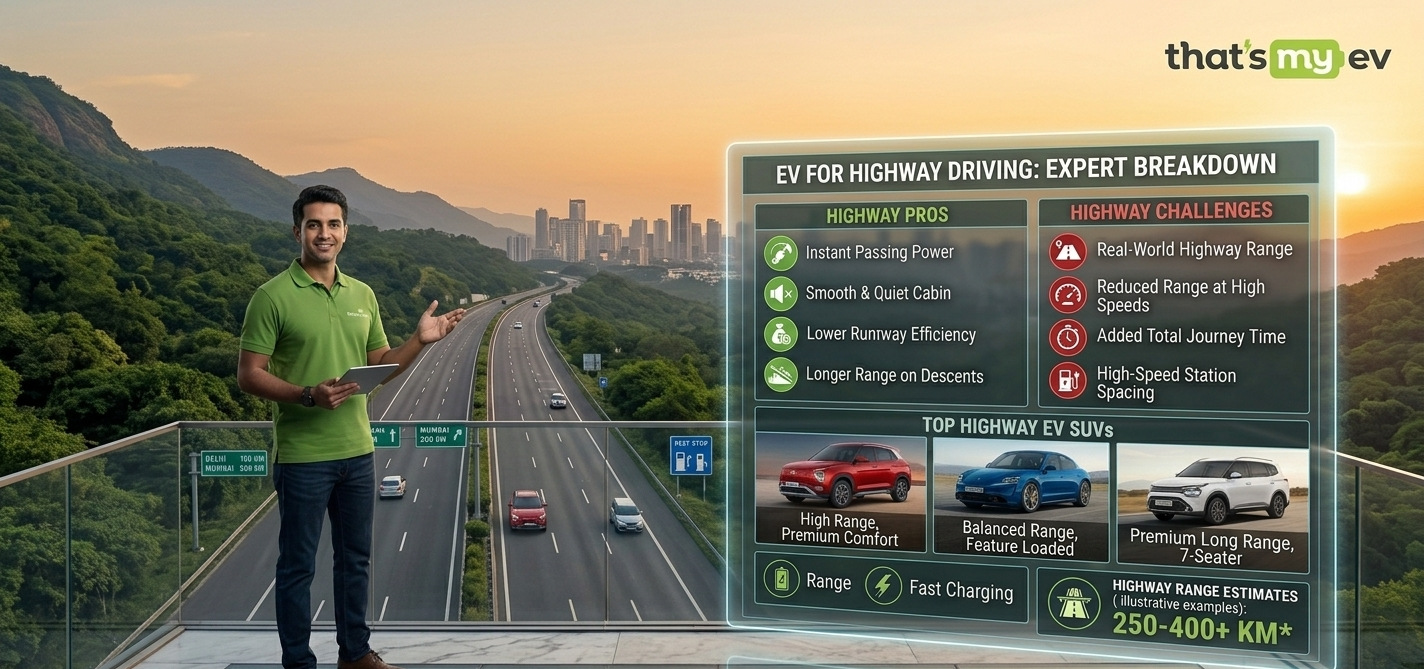
"What if I run out of charge on the highway?" This is the question that stops more EV purchases than any other. In 2026, the honest answer has changed significantly from what it was two years ago. But it still depends heavily on which EV you buy, which highway you're driving on, and what your driving pattern looks like.
Here's the complete picture.
The Range Reality on Highways
EVs are more efficient in city traffic (stop-start generates regen energy) and less efficient on highways (sustained high speed drains faster). At 100–110 km/h on a highway with AC running, expect the real-world range to be 15–20% below the city range figure.
What this means for popular models:
Car | City Real-World | Highway Real-World |
Tata Nexon EV (45 kWh) | 300–320 km | 250–270 km |
MG ZS EV | 300–350 km | 260–290 km |
Mahindra BE 6 (79 kWh) | 430–470 km | 380–420 km |
435 km | 560 km* | |
BYD Seal Premium | 420–460 km | 400–440 km |
*The EV6 is an anomaly. It's actually more efficient at highway speeds than in the city due to its aerodynamics.
Which Highways Are Ready for EVs?
Well-covered corridors (comfortable EV travel):
Delhi → Jaipur (NH48): DC chargers at Manesar, Dharuhera, Rewari, Shahjahanpur, Neemrana, Jaipur
Delhi → Agra (Yamuna Expressway): Mathura, Vrindavan, Agra
Delhi → Chandigarh (NH44): Karnal, Ambala, Chandigarh
Mumbai → Pune (NH48): Multiple chargers, well-covered
Bengaluru → Mysuru (NH275): Well-covered
Bengaluru → Chennai (NH44): Adequate coverage
Corridors requiring more planning:
Delhi → Dehradun: Plan stops at Muzaffarnagar, Roorkee
Delhi → Shimla: Sparse beyond Chandigarh, so check charger availability before starting
Mumbai → Goa: Improving but patchy in the Konkan section
Most interstate routes through Tier-3 towns: Check apps before departure
Highway Charging Strategy
For EVs with 250–300 km highway range (Nexon EV, ZS EV):
Plan a 25–30 minute DC fast charging stop every 200–220 km
Stop near meals and restrooms, since 25 minutes is exactly a tea-and-snack stop
Apps: Thatsmycharge (by ThatsmyEV), Tata Power EZ Charge, BPCL Pulse
For EVs with 380–500 km highway range (BE 6, Kia EV6, BYD Seal):
You can do most Indian highway routes without a charging stop
One quick 15–20 minute stop for longer routes of 500+ km
The Two Questions Before a Highway Trip in an EV
What's my highway real-world range? Take your city range and subtract 20%. That's your conservative highway estimate.
Are there chargers every 150–180 km on my route? Check Thatsmycharge or e-AMRIT before you leave. If chargers are available, proceed with confidence. If not, charge to 100% at home and carry a plan B.
When EVs Are NOT Ideal for Highway Use
Frequent road trips to off-highway destinations (dargahs, pilgrimages, rural family visits)
Driving through states with limited infrastructure (some NE states, remote Rajasthan, coastal Odisha)
Daily highway commutes of 200+ km without home charging at destination
FAQs
Can I drive from Delhi to Jaipur in an EV? Yes, easily. The NH48 corridor has adequate DC fast chargers. For EVs with 280+ km real-world range, it's a single-stop or no-stop trip depending on your model.
Which EV is best for highway driving in India? The Mahindra BE 6 (79 kWh) at ₹26.90L for best value-to-highway-capability ratio. The Kia EV6 for best charging speed at ₹65.97L. Both handle highways with genuine confidence.
Do EVs lose more range at highway speeds? Yes. Most EVs lose 15–25% of their city range at sustained 100–110 km/h with AC. The exception is highly aerodynamic cars like the Kia EV6, which are actually more efficient at highway speeds.
How many charging stops does Delhi to Jaipur need in an EV? An EV with 280 km plus real-world range can do the 280 km NH48 run with a single 20 to 30 minute stop, usually at Behror or Neemrana. Longer-range EVs can complete it without stopping.
What range do I need for confident highway EV driving in India? On well-covered corridors like NH48, 250 km of highway range is comfortable. On routes where chargers sit 150 to 180 km apart, aim for 300 km plus real-world range to travel without anxiety.
Which apps help plan an EV highway trip in India? Thatsmyev.com shows crowd-verified charger status, while Tata Power EZ Charge and Statiq handle live availability and UPI payment. Checking e-AMRIT before leaving confirms the government-registered chargers on your route.
Plan your EV highway route with charging station maps on ThatsmyEV.
Comments
Write your comment on Is EV Good for Highway Driving India
No comments yet. Be the first to share your thoughts.