India's Lithium and Nickel Processing Scheme: What the Mines Ministry Has Said, and Why It Won't Touch EV Prices Yet
Quick Summary
The Mines Secretary said on 22 September 2026 that a lithium and nickel processing incentive is coming, with details after approvals (Ministry of Mines).
No outlay, rate or date is published; a ₹3,000 crore figure in circulation is unconfirmed.
Processing parks cleared in four states: Maharashtra lithium, Odisha nickel, Gujarat and Andhra Pradesh rare earths (Ministry of Mines).
The National Critical Mineral Mission totals ₹34,300 crore over seven years (PIB).
A ₹1,500 crore recycling scheme covering spent EV batteries has run since FY2025-26 (Ministry of Mines).
Nothing announced affects EV prices in 2026 (our assessment).
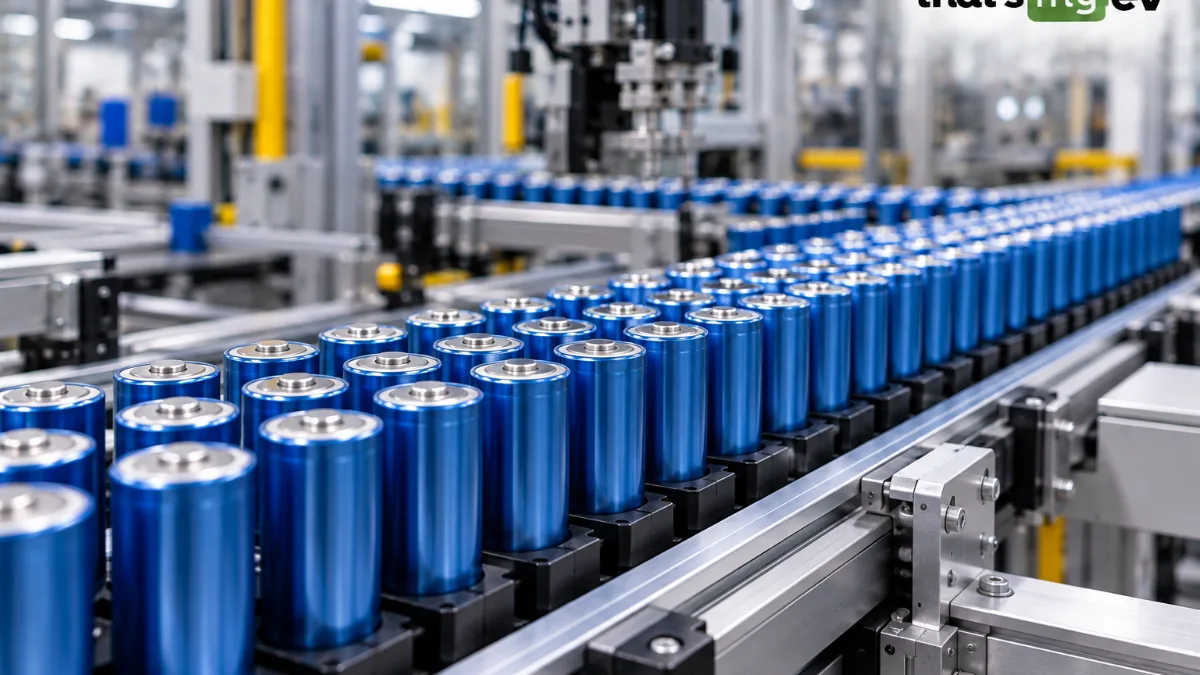
India's Lithium and Nickel Processing Scheme: What the Mines Ministry Has Said, and Why It Won't Touch EV Prices Yet
Mines Secretary Keshav Chandra told the Federation of Indian Mineral Industries on 22 September 2026 that an incentive scheme for lithium and nickel processing is coming very soon. The catch for an EV buyer is in what he did not say: the ministry has published no outlay, no incentive rate and no launch date, and said details would follow once approvals are in place.
Processing is also the middle of the battery chain, not the end a car buyer pays for. Lithium has to be mined or imported, refined into battery-grade chemicals, turned into cathode material, then made into cells. India still imports most of its cells; JSW Greentech's CEO named LFP cells as one of Ampstar's two main imports at its 22 September 2026 launch, which we covered in our EV news section.
What the Mines Ministry Has Confirmed
Chandra said the government has cleared critical mineral processing parks in four states, each built around one mineral. Maharashtra is to focus on lithium and Odisha on nickel, which has its own reserves. Gujarat and Andhra Pradesh are assigned rare earths.
The new scheme sits inside the National Critical Mineral Mission, which the Union Cabinet approved with ₹16,300 crore of government spending and ₹18,000 crore of expected investment by public sector companies, ₹34,300 crore over seven years, according to PIB. The mission already names processing parks and recycling; the new scheme would fund the processing stage.
India's Critical Mineral Stack: Key Figures
Scheme | Money | Status |
National Critical Mineral Mission | ₹16,300 crore government, ₹18,000 crore PSU, ₹34,300 crore total | Approved; seven-year mission |
Critical mineral recycling incentive | ₹1,500 crore, FY2025-26 to FY2030-31 | Approved 3 September 2025; guidelines issued 2 October 2025 |
PLI for advanced chemistry cells | ₹18,100 crore, 50 GW target | Running |
Lithium and nickel processing incentive | Not published | Announced 22 September 2026; awaiting approvals |
Mission and recycling figures from PIB releases on Cabinet approvals and the Ministry of Mines guidelines of 2 October 2025. Cell PLI figures from the Heavy Industries Minister's address of 2 September 2026. Processing scheme status from the Mines Secretary's remarks of 22 September 2026.
A figure of around ₹3,000 crore is in circulation for the new scheme's outlay. The Ministry of Mines has not published it, and Chandra gave no number on 22 September 2026, so treat it as unconfirmed until the scheme is notified.
Processing capacity is not cell supply A lithium refinery produces battery-grade chemicals, not batteries. Between that stage and your car sits cathode production and cell manufacturing, which the separate cell PLI scheme is meant to build. ThatsMyEV does not project a battery price effect from this scheme, because none can be calculated until every stage in between exists at scale in India. |
The Recycling Scheme Is Already Running
The nearer-term lever is recycling, because it needs no new mine. The ₹1,500 crore recycling scheme counts spent lithium-ion batteries and battery scrap as eligible feedstock, caps the incentive at ₹50 crore for a large entity and ₹25 crore for a small one, and aims for 270 kilotonnes of annual recycling capacity producing about 40 kilotonnes of critical minerals, according to the Ministry of Mines.
For owners, that matters at the end of a battery's life. A domestic recycling market gives a worn pack a value, which over time should show up in battery replacement and resale arithmetic. Our EV battery basics guide explains how chemistry and warranty terms affect that.
Choosing an EV and unsure about battery warranty? Get a free expert callback |
The ThatsMyEV Take
What the government is really doing is working backwards up the battery chain. It funded cells first through the PLI scheme, then recycling, and is now reaching for refining. The order makes sense: refining is where import dependence is hardest to fix with a factory alone.
What decides whether it works is whether the scheme is notified with an outlay large enough to matter and a timeline that lines up with the cell plants. An announcement without a rate, a budget or a date gives an investor nothing to plan against, and the Mines Ministry has not yet closed that gap.
ThatsMyEV's advice to a buyer on 23 September 2026: do not wait for a cheaper Indian-made battery. Nothing announced on 22 September 2026 reaches a car you can buy in 2026. If the Tata Nexon EV or any other EV fits your driving, judge it now on price, certified range and battery warranty, using our comparison tool to line those up against every electric car on sale.
Frequently Asked Questions
What is India's lithium and nickel processing scheme?
It is an incentive scheme the Ministry of Mines says it will launch to support domestic processing of lithium and nickel into battery-grade materials. Mines Secretary Keshav Chandra announced it on 22 September 2026 and said details would follow once approvals are received.
When will the lithium and nickel processing scheme launch?
The Ministry of Mines has not given a launch date. On 22 September 2026, the Mines Secretary said the scheme would come very soon, but said its details depend on approvals that had not yet been granted.
What is the outlay of the lithium and nickel processing scheme?
The Ministry of Mines has not published an outlay as of 23 September 2026. A figure of around ₹3,000 crore is in circulation, but no official document confirms it, so it should be treated as unconfirmed until the scheme is notified.
Which states will host critical mineral processing parks?
The government has cleared critical mineral processing parks in four states, according to the Mines Secretary. Maharashtra is to focus on lithium, Odisha on nickel, and Gujarat and Andhra Pradesh on rare earths.
Will the lithium processing scheme make electric cars cheaper in India?
Not in the near term. Processing produces battery-grade chemicals, and cathode and cell manufacturing still have to scale in India before a car battery gets cheaper. Nothing announced on 22 September 2026 affects EV prices in 2026.
What is the National Critical Mineral Mission?
The National Critical Mineral Mission is a seven-year programme approved by the Union Cabinet with ₹16,300 crore of government spending and ₹18,000 crore of expected PSU investment. It covers exploration, mining, processing parks, recycling and overseas mineral assets.
Does India have a scheme for recycling EV batteries?
Yes, a ₹1,500 crore critical mineral recycling incentive approved on 3 September 2025 covers spent lithium-ion batteries and battery scrap. It runs from FY2025-26 to FY2030-31, with incentives capped at ₹50 crore for large recyclers and ₹25 crore for small ones.
Why does India import lithium-ion battery cells?
India imports cells because domestic cell manufacturing and the supply of processed battery materials are still being built. The ₹18,100 crore PLI scheme for advanced chemistry cells targets 50 GW of domestic capacity, and processing incentives aim at the materials those plants need.
Want help picking an EV with the right battery? Ask a TMEV expert on WhatsApp |
Sources
Mines Secretary Keshav Chandra's remarks at the 60th Annual General Meeting of the Federation of Indian Mineral Industries, 22 September 2026. PIB release on the Cabinet approval of the National Critical Mineral Mission; PIB release on the recycling scheme guidelines, 2 October 2025; the Heavy Industries Minister's address of 2 September 2026 for the cell PLI figures. All accessed 23 September 2026.
Comments
Write your comment on India's Lithium and Nickel Processing Scheme: What the Mines Ministry Has Said, and Why It Won't Touch EV Prices Yet
No comments yet. Be the first to share your thoughts.