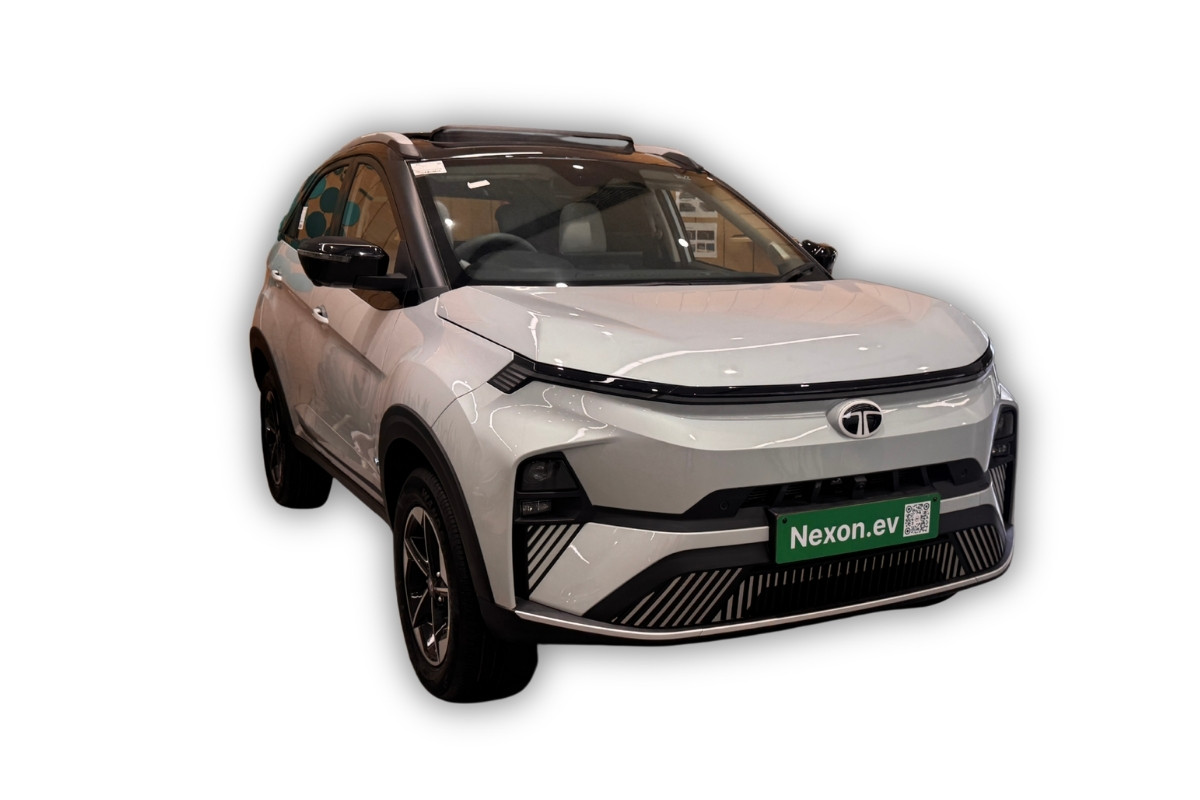
Tata Nexon EV
SUV
- Ex-showroom
- ₹12.49 Lakh - ₹17.69 Lakh
- On-road (approx.)
- —
- Certified range
- 275 km / 489 km (MIDC)
- Real-world range
- 350 km
- Battery packs
- 30 kWh / 45 kWh
- Running cost
- ₹1.03/km
- Our pick variant
- Empowered+ A 45 Red #DARK · ₹17.69 Lakh
Buy the Tata Punch EV. The 40 kWh version costs ₹3.25 lakh less than the equivalent Tata Nexon EV and gives up 15 km of real world range for it, while charging faster and scoring higher in Bharat NCAP. The Tata Nexon EV earns its premium only if you want Level 2 ADAS, and that needs a ₹17.49 lakh variant.
SUV
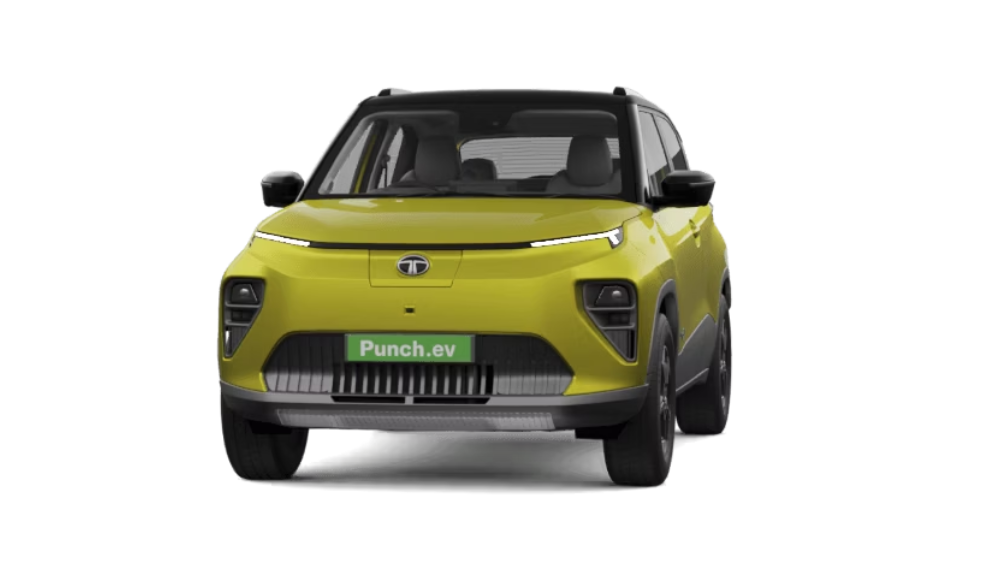 Our pick
SUV
Compare these two properly and the gap narrows fast. The Punch EV 40 kWh starts at ₹10.89 lakh. The Nexon EV 45 kWh starts at ₹14.14 lakh. That ₹3.25 lakh buys you 21 km of certified range, 15 km of real world range, 15 PS, 61 Nm and 10 km/h of top speed.
What it does not buy at that price is any of the equipment the Nexon.ev is known for. Level 2 ADAS reaches three of eight variants. The 12.3 inch Harman screen and the nine speaker JBL system arrive with it. To get any of that you are at ₹17.49 lakh, which is ₹6.60 lakh above the Punch EV 40 kWh.
Meanwhile the Punch EV takes the things you notice every week. It returns 48.3 km of certified range for every lakh spent against 39.2. It charges 10 to 80 percent in about half an hour where the Nexon.ev needs forty minutes. It scored 31.46 out of 32 for adult occupant protection under Bharat NCAP, against 29.86. Both carry Tata's lifetime battery warranty on the larger pack, so nothing separates them on long term risk either.
On a straight count of specification categories these two finish level. Counting is not the same as weighing. A ₹3.25 lakh price gap and a better crash result matter more to most buyers than 21 km of certified range.
The Nexon EV is the better car. The Punch EV is the better buy. For most households ₹3.25 lakh is a wide enough gap to make that distinction matter.
The Punch EV opens at ₹9.69 lakh against ₹12.49 lakh, and the comparable 40 kWh Punch at ₹10.89 lakh undercuts the 45 kWh Nexon.ev at ₹14.14 lakh by ₹3.25 lakh.
489 km against 468 km on the revised MIDC Part 1 plus Part 2 cycle, which is a 21 km gap from a battery 5 kWh larger.
Discount both claims by about 28 percent for Indian conditions and the Nexon.ev returns roughly 350 km against 335 km, worth one extra highway run a month to most owners.
The Nexon.ev carries the larger pack at 45 kWh against 40, which is where its 21 km of extra certified range comes from.
The Nexon.ev carries the larger pack at 45 kWh, but the lighter Punch EV pulls more out of its 40 kWh, 11.7 km per kWh against 10.9.
48.3 km of certified range per lakh spent against 39.2. That 23 percent gap is the clearest single number on this page.
The Punch EV takes about 30 minutes for 10 to 80 percent on a 65 kW charger. The Nexon.ev is capped at 60 kW and needs 40. Both use a 7.2 kW AC charger at home.
106 kW and 215 Nm against 95 kW and 154 Nm, which reads as 8.9 seconds to 100 kmph and 150 kmph flat out, against 9.0 seconds and 140 kmph.
366 litres plus a 14 litre frunk against 350 and 11.6. The smaller car takes more luggage.
The Nexon.ev is 115 mm longer on a 53 mm longer wheelbase, which you feel as rear knee room and as composure at 100 kmph. The Punch EV turns inside 5 metres.
Both hold five Bharat NCAP stars with six airbags standard, but the Punch EV posted the better numbers, 31.46 out of 32 for adults and 45 out of 49 for children against 29.86 and 44.95.
The Nexon.ev offers Level 2 ADAS with seven functions, though only on the top three of eight variants. The Punch EV offers none at any price.
Eight variants against six. The Nexon.ev gives you more rungs to climb, the Punch EV gives you a ladder that is easier to read.
| Specification | Tata Nexon EV | Tata Punch EV | Winner |
|---|---|---|---|
| Ex-showroom price | ₹12.49 Lakh - ₹17.69 Lakh | ₹9.69 Lakh - ₹12.59 Lakh | Tata Punch EV |
| Battery packs | 30 kWh / 45 kWh | 30 kWh / 40 kWh | Tie |
| Certified range | 275 km / 489 km (MIDC) | 365 km / 468 km (MIDC) | Tata Nexon EV |
| Real-world range (est.) | 350 km | 335 km | Tata Nexon EV |
| Efficiency (km/kWh) | 10.9 | 11.7 | Tata Punch EV |
| Running cost (₹/km) | 1.03 | 0.96 | Tata Punch EV |
| Top speed (km/h) | 150 | 140 | Tata Nexon EV |
| Boot space (litres) | 350 | 366 | Tata Punch EV |
| Variants | 8 | 6 | Tata Nexon EV |
The Tata Punch EV is cheaper by ₹2.80 lakh at entry. It starts at ₹9.69 lakh ex showroom against ₹12.49 lakh for the Tata Nexon EV. Compare the larger battery packs and the gap widens: ₹10.89 lakh for the Punch EV 40 kWh against ₹14.14 lakh for the Nexon EV 45 kWh.
Entry to entry, the gap is ₹2.80 lakh. Compare the packs that actually carry the lifetime battery warranty and it grows to ₹3.25 lakh.
On road in Delhi both benefit from the EV road tax waiver, so the uplift over ex showroom runs around 9 percent rather than the 12 percent a petrol car attracts. The Punch EV lands between ₹10.29 lakh and ₹13.33 lakh. The Nexon.ev runs ₹13.72 lakh to ₹19.36 lakh.
There is a third option on the Punch EV. Battery as a Service starts at ₹6.49 lakh and charges ₹2.60 per kilometre for the pack, which takes the battery out of the purchase price entirely. Under about 1,000 km a month that is the cheapest legitimate way into a five star electric SUV in India. Past roughly 1,200 km a month, buying the battery outright wins over five years.
The Tata Nexon EV has more real world range, about 350 km from its 45 kWh pack against 335 km from the Tata Punch EV's 40 kWh. The Punch EV is the more efficient of the two, returning 11.7 km per kWh against 10.9.
Both numbers come off the revised MIDC cycle. Since September 2024 Indian manufacturers have had to certify range across urban and extra urban driving instead of urban alone, which pushed every claim in the market down and made all of them more honest. The Nexon.ev 45 kWh is rated 489 km. The Punch EV 40 kWh is rated 468 km.
Take 28 percent off both for air conditioning, traffic, 35 degree heat and highway speeds. You get 350 km and 335 km. Fifteen kilometres of difference out of a battery 5 kWh bigger, which tells you how much the Punch EV's 50 kg weight advantage and smaller frontal area are worth.
The smaller packs make the point harder. The Punch EV 30 kWh is rated 365 km. The Nexon.ev 30 kWh is rated 275 km. Cheaper car, 90 km further on paper. There is no argument for the 30 kWh Nexon.ev.
Then there is efficiency, the number nobody prints on a brochure and everybody pays for. At 11.7 km per kWh the Punch EV costs about ₹0.96 a kilometre on home charging at ₹8 a unit. The Nexon.ev costs ₹1.03. Over 15,000 km a year that is ₹1,050, which is small on its own and sits on top of a purchase price already ₹3.25 lakh higher.
The Tata Punch EV charges faster. It accepts 65 kW and completes 10 to 80 percent in about 30 minutes. The Tata Nexon EV is capped at 60 kW and takes 40. Both come with a 7.2 kW AC charger for home use.
The 60 kW ceiling has become the Nexon.ev's most criticised number. Hyundai lifted the Creta Electric to 100 kW capability with a software update alone. Against its own stablemate the Nexon.ev is slower on peak rate and slower on total stop time, and it is carrying the bigger battery while it happens.
At home the two are level, and both do better than the segment expects. A 7.2 kW wall box is standard on every Punch EV variant including the ₹9.69 lakh Smart, where the Tiago.ev still ships with 3.3 kW. The Punch EV goes 10 to 100 percent in about 5 hours 20 minutes. The Nexon.ev takes 6 hours 36.
Both run CCS2, so every public DC network in India works with either car. Neither has a heat pump. In a Delhi summer or a north Indian winter, expect both to sit at the pessimistic end of the range estimates above.
Both hold a Bharat NCAP five star rating with six airbags standard on every variant. The Tata Punch EV scored higher, 31.46 out of 32 for adult occupant protection and 45 out of 49 for children, against 29.86 and 44.95 for the Tata Nexon EV.
The cheaper car is the better tested one here. 31.46 out of 32 puts the Punch EV among the highest absolute adult protection scores recorded under Bharat NCAP by anything sold in India, at any price.
Both results were run independently under India's own protocol rather than claimed by Tata, and both belong to the electric versions specifically rather than being carried over from the petrol cars. One piece of fine print on the Nexon.ev: the car submitted was the top specification Empowered Plus with the 45 kWh pack, so the tested vehicle carried the full equipment list.
Active safety is where the Nexon.ev pulls back. It offers Level 2 ADAS with seven functions, covering traffic sign recognition, lane change support, lane departure warning, lane keep assist, forward collision warning, autonomous emergency braking and high beam assist. It stops short of adaptive cruise control. It also reaches only the top three of eight variants, so in practice ADAS on this car costs ₹17.49 lakh. The Punch EV offers nothing.
Crash structure is decided at the factory and cannot be retrofitted. Driver assistance can be lived without. On protection alone the Punch EV is the stronger car and it costs ₹3.25 lakh less.
The Tata Nexon EV has the more advanced cabin, with a 12.3 inch Harman touchscreen and a nine speaker JBL system, but both arrive only on variants above ₹17 lakh. The Tata Punch EV's 10.25 inch screen and four speaker Harman setup cover the essentials for ₹6 lakh less.
On the Empowered+ A 45 the Nexon.ev gives you a 31.24 cm Harman touchscreen, which is 12.3 inches, next to a 26.03 cm reconfigurable cockpit. Audio is a nine speaker JBL system with an external subwoofer. Add the voice assisted panoramic sunroof, ventilated front seats, a cooled glovebox, 45 W USB C, an air purifier with AQI display and an 11.6 litre frunk, and the specification reads like a car from the class above.
The Punch EV competes on choices rather than numbers. Doors that open to 90 degrees make child seats and elderly passengers easier to deal with. Regeneration adjusts through paddle shifters across four levels. The jewelled rotary gear selector belongs in something twice the price. Its screen is 10.25 inches, its cockpit the same size, its audio a four speaker Harman system and its sunroof a single pane instead of a panoramic.
Read the kit lists side by side and the Nexon.ev wins. Read them at the same price and the result changes. A ₹14 lakh Nexon.ev against a ₹12.29 lakh Punch EV Empowered leaves almost nothing between them.
The Tata Punch EV carries more luggage, 366 litres plus a 14 litre frunk against the Tata Nexon EV's 350 and 11.6. The Nexon EV is the bigger car overall, with 115 mm more length and 53 mm more wheelbase for rear knee room.
The smaller car takes more cargo, which is unusual. It comes from the Punch EV's tall boy shape, which turns height into boot volume.
Where the Nexon.ev earns its extra size is between the axles. 2,498 mm of wheelbase against 2,445 mm shows up as rear knee room with an adult driving, and as composure at 100 kmph where the shorter Punch EV moves around more.
In town the order flips. At 3,880 mm long and turning inside 5 metres, the Punch EV is the easier car in a Mumbai basement or a Bengaluru side street. Ground clearance is close enough not to matter, 190 mm on the Nexon.ev and 195 mm on the Punch EV, so neither scrapes with four aboard.
Both cars carry Tata's lifetime battery warranty with unlimited kilometres for the first registered private owner, but only on their larger packs. The Tata Nexon EV 45 kWh and Tata Punch EV 40 kWh qualify. The 30 kWh versions of both revert to 8 years or 1,60,000 km.
This is the line most buyers miss. Take either car with the smaller battery and the lifetime cover goes away.
On the Punch EV the step from Smart Plus 30 to Smart Plus 40 costs ₹60,000 and brings the lifetime warranty plus four disc brakes. Very little else in either lineup is that clear cut.
Both packs are liquid cooled and sealed to IP67. Both carry an 8 year, 1,60,000 km motor warranty and a 3 year, 1,25,000 km vehicle warranty. Neither has a heat pump.
Because the warranty terms match on the larger packs, long term ownership risk on these two cars is the same. That removes the argument people usually reach for when justifying the more expensive model.
Buy the Tata Punch EV Smart Plus 40 kWh at ₹10.89 lakh. It is the cheapest route to the lifetime battery warranty and four disc brakes. On the Tata Nexon EV the 45 kWh pack is essential for the same reason, which makes Creative 45 at ₹14.14 lakh the entry point worth considering.
The Punch EV ladder runs Smart, Smart Plus 30, Smart Plus 40, Adventure, Empowered and Empowered Plus S. Value peaks at Smart Plus 40. Above it, Empowered at ₹12.29 lakh brings the 360 degree camera, the 10.25 inch screen and wireless Android Auto. Empowered Plus S adds a sunroof and ventilated seats for ₹30,000 more, which is one of the easier upgrade decisions in the segment.
The Nexon.ev ladder runs eight deep, from Creative+ MR to Empowered+ A 45 Red #DARK. Skip both 30 kWh cars. They give up the lifetime warranty, the rear disc brakes, the tyre pressure monitor and the sunroof to save ₹1.50 lakh, and they are rated 90 km below the equivalent Punch EV.
If ADAS is the whole reason you are looking at the Nexon.ev, price it properly. It appears on the top three variants only, so your entry point is ₹17.49 lakh. That is ₹6.60 lakh above a Punch EV 40 kWh, for a car that goes 15 km further per charge.
| Specification | Tata Nexon EV | Tata Punch EV |
|---|---|---|
| Safety | ||
| Airbag Count | 6 | 6 |
| Airbag Details | Driver, Front Passenger, 2 Curtain, 2 Side | Dual Front, Side, Curtain |
| ADAS Level | Level 2 | — |
| ADAS Features List | TSR, LCS, LDW, LKA, FCW, AEB, HBA | — |
| Electronic Stability Program (ESP) | Yes | Yes |
| ABS with EBD | Yes | Yes |
| Parking Sensors | Both | Rear |
| Camera System | 360° + Blind Spot View | 360 Degree (with Blind Spot View Monitor) |
| TPMS | Yes | i-TPMS (Indirect) |
| Child Seat Anchorages | ISOFIX | ISOFIX |
| Charging | ||
| Charging Standard / Inlet Type | CCS2 / Type 2 | CCS2 |
| On-board Charger Capacity (kW) | 7.2 kW | 7.2 kW |
| AC Charging Time (0-100%) (Hours) | 6 hrs 36 min (7.2 kW AC wall box); 17 hrs 36 min (15A socket) | ~5.3 hrs (10-100% @ 7.2 kW); ~14.8 hrs @ 15A |
| DC Fast Charging Time (10-80%) (Minutes) | 40 minutes (60 kW DC) | ~30 min (10-80% @ 65 kW) |
| Max DC Charging Rate Support (kW) | 60 kW | 65KW |
| Regenerative Braking | Multi-mode regen - 4 levels (paddle shifters) | Yes (4 Levels: 0-3, paddle-shifter) |
| Warranty | ||
| Battery Warranty | Lifetime HV Battery Warranty — unlimited km (1st owner) | Lifetime / Unlimited km (1st owner, private reg.) |
| Vehicle Warranty | 3 years / 1,25,000 km | 3 Years / 1,25,000 km |
| Motor Warranty | 8 years / 1,60,000 km | 8 Years / 1,60,000 km |
| Dimensions | ||
| Overall Length (mm) | 3995 | 3880 |
| Overall Width (mm) | 1802 | 1742 |
| Overall Height (mm) | 1625 | 1622 |
| Wheelbase (mm) | 2498 | 2445 |
| Ground Clearance (Unladen) (mm) | 190 | 195 |
| Boot Volume (Litres) | 350 | 366 |
| Frunk Volume (Front Trunk) (Litres) | Available (litres not published) | 14 |
| Seating Capacity | 5 | 5 |
| Turning Circle Radius (Metres) | 5.3 | <5 |
| Kerb Weight (kg) | 1400 | 1350 |
| Powertrain | ||
| Motor Type | Permanent Magnet Synchronous (Gen-2) | Permanent Magnet Synchronous Motor |
| Max Power | 106 kW (144 PS) | 95 kW |
| Max Torque (Nm) | 215 | 154 |
| Real-World Range (ThatsmyEV est.) | 350 km | 335 km |
| Drive Type | FWD | FWD |
| Transmission | Single-Speed Automatic | Single Speed Automatic |
| Drive Modes | Eco, City, Sport | Eco, City, Sport |
| Acceleration (0-100 km/h) (Seconds) | 8.9 | 9 |
| Top Speed (km/h) | 150 | 140 |
| General Info | ||
| Brand | Tata | — |
| Model Name | Nexon.ev | Punch.ev |
| Variant | Empowered+ A 45 #DARK | Empowered Plus S (40 kWh) |
| Ex-Showroom Price (Starting) | 1769000 | 1259000 |
| Battery & Range | ||
| Battery Pack Capacity (kWh) | 45 | 40 |
| Battery Type | High energy density Li-ion | LFP (Prismatic Cell) |
| Certified Range (MIDC) (km) | 489 | Up to 468 km |
| Thermal Management System | Liquid Cooled | Liquid Cooled |
| Ingress Protection (IP Rating) | IP67 | IP67 |
| BaaS | No | Yes |
| BaaS Upfront Price | — | 649000 |
| BaaS Per-km Rate | — | 2.6 |
| Exterior & Tech | ||
| Keyless Entry / Start | Push Button Start (PEPS) | PEPS (Push Button Start/Stop) with Keyless Entry |
| Headlamp Operation | Auto | Auto |
| Headlamp Type | LED Projector | Smart LED Headlamps |
| Interior & Tech | ||
| Infotainment Screen Size | 31.24 cm (12.3") | 26.03 cm (10.25 inch) HD |
| Instrument Cluster Size | 26.03 cm (10.25") | 26.03 cm (10.25 inch) Digital Cockpit |
| Audio System Brand | JBL | Harman |
| Speaker Count | 9 | 4 |
| Wireless Connectivity | Android Auto / Apple CarPlay | Wireless Android Auto & Apple CarPlay |
| Connected Car App | iRA + Arcade.ev | iRA.ev |
| Wireless Charging | Yes | Front |
| Sunroof Type | Voice-assisted panoramic | Single Pane (Voice-assisted) |
| Climate Control | FATC (auto AC) | i-FATC (with Air Purifier) |
| Ventilated Seats | Driver & Co-driver | Front Row |
| Driver Seat Adjustment | Manual | Height Adjustable (Manual) |
| Rear Seat Folding | 60:40 Split | — |
| Air Filtration | PM2.5 Air Purifier with AQI display | Air Purifier |
| Ambient Lighting | Multi-Mood | Yes |
| Chassis & Wheels | ||
| Front Suspension | MacPherson Strut | Independent, Lower Wishbone, McPherson Strut with Coil Spring |
| Rear Suspension | Twist Beam | Semi-independent Twist Beam with Coil Spring & Shock Absorber |
| Front Brakes | Disc | Disc |
| Rear Brakes | Disc | Drum |
| Wheel Size & Type | R16 | R16 Diamond Cut Alloy |
| Tyre Size | 215/60 R16 | 195/60 R16 |
| Spare Wheel Size/Type | Yes | — |
For most Indian buyers the Tata Punch EV 40 kWh is the better purchase. It costs ₹3.25 lakh less than the comparable Tata Nexon EV 45 kWh, gives up 15 km of real world range, charges faster, and scored higher under Bharat NCAP at 31.46 out of 32. The Tata Nexon EV is the better car if you want Level 2 ADAS or drive highways regularly, but its ADAS variants start at ₹17.49 lakh.
The Tata Punch EV starts at ₹9.69 lakh ex showroom against ₹12.49 lakh for the Tata Nexon EV, a gap of ₹2.80 lakh. Comparing the larger battery packs, the Punch EV 40 kWh at ₹10.89 lakh undercuts the Nexon EV 45 kWh at ₹14.14 lakh by ₹3.25 lakh. On road in Delhi the Punch EV runs ₹10.29 to ₹13.33 lakh and the Nexon EV ₹13.72 to ₹19.36 lakh.
The Tata Nexon EV has more range. Its 45 kWh pack is certified at 489 km on the revised MIDC Part 1 plus Part 2 cycle against 468 km for the Tata Punch EV 40 kWh, which works out to roughly 350 km against 335 km in real Indian conditions. On the smaller packs the order reverses. The Punch EV 30 kWh is rated 365 km against 275 km for the Nexon EV 30 kWh.
No. The Tata Punch EV does not offer ADAS on any variant. The Tata Nexon EV offers Level 2 ADAS with seven functions, covering traffic sign recognition, lane change support, lane departure warning, lane keep assist, forward collision warning, autonomous emergency braking and high beam assist, but only on the top three of its eight variants, starting at ₹17.49 lakh. Neither car offers adaptive cruise control.
Both hold a Bharat NCAP five star rating with six airbags standard. The Tata Punch EV scored higher, 31.46 out of 32 for adult occupant protection and 45 out of 49 for children, against 29.86 and 44.95 for the Tata Nexon EV. The Nexon EV is stronger on active safety because it offers Level 2 ADAS, which the Punch EV does not.
The Tata Punch EV charges faster. It accepts up to 65 kW and completes 10 to 80 percent in about 30 minutes, while the Tata Nexon EV is capped at 60 kW and takes 40 minutes. Both ship with a 7.2 kW AC charger, taking about 5 hours 20 minutes and 6 hours 36 minutes respectively for a near full charge at home.
Only on their larger packs. The Tata Nexon EV 45 kWh and the Tata Punch EV 40 kWh both carry a lifetime high voltage battery warranty with unlimited kilometres for the first registered private owner. The 30 kWh versions of both cars revert to 8 years or 1,60,000 km. Both also carry an 8 year, 1,60,000 km motor warranty.
On the Tata Punch EV, the Smart Plus 40 kWh at ₹10.89 lakh. The ₹60,000 premium over the Smart Plus 30 buys the lifetime battery warranty and four disc brakes. On the Tata Nexon EV the 45 kWh pack is essential for the same warranty reason, which makes Creative 45 at ₹14.14 lakh the entry point worth considering.
Yes for city use, and its 366 litre boot plus 14 litre frunk hold more than the Tata Nexon EV's 350 and 11.6 litres. For regular four up highway travel the Nexon EV's 53 mm longer wheelbase gives noticeably better rear knee room and a more settled ride at 100 kmph.
It works if you drive under about 1,000 km a month. Battery as a Service takes the battery cost out of the purchase price, bringing the Tata Punch EV to ₹6.49 lakh ex showroom with a ₹2.60 per kilometre battery charge. Past roughly 1,200 km a month, buying the battery outright is cheaper over five years.
Tell the Thatsmyev EV Finder your budget, your daily distance and what matters most. It shortlists the EVs that actually fit, in seconds.
Tata Nexon EV vs Tata Punch EV, summarised. The Tata Punch EV costs ₹9.69 to ₹12.59 lakh ex showroom, offers 30 kWh and 40 kWh packs certified at 365 km and 468 km on the revised MIDC Part 1 plus Part 2 cycle, returns roughly 335 km in real Indian conditions, charges 10 to 80 percent in about 30 minutes at 65 kW, and scored 31.46 out of 32 for adult occupant protection under Bharat NCAP. The Tata Nexon EV costs ₹12.49 to ₹17.69 lakh, offers 30 kWh and 45 kWh packs certified at 275 km and 489 km for roughly 350 km real world, charges 10 to 80 percent in 40 minutes at 60 kW, scored 29.86 out of 32, and adds Level 2 ADAS with seven functions on its top three variants. Both carry Tata's lifetime battery warranty on the larger pack. The Punch EV delivers 48.3 km of certified range per lakh spent against 39.2 on the Nexon EV, and ThatsmyEV picks the Punch EV Smart Plus 40 kWh at ₹10.89 lakh as the better buy of the two.
Specifications and prices are read live from the Thatsmyev vehicle database, the same source as our model pages, and are cross-checked by Thatsmyev editors. No brand pays to appear here and no verdict is sponsored. Real-world range is a Thatsmyev estimate at roughly 28% below the certified MIDC figure.
We'd like to use Meta advertising cookies to measure how our ads perform. You can change this anytime from "Cookie settings" in the footer. Cookie Policy