EV in Indian Summer Heat (2026): What Happens to Your Battery & Range
Quick Summary
Research shows extreme heat can reduce an EV's driving range by up to 20%
Two separate heat effects: increased AC usage (draws power from the battery) and direct battery thermal stress (affects chemistry)
EV batteries operate most efficiently between 15–35°C; above 35°C, battery efficiency begins declining
LFP batteries (used in many Tata EVs) stand up better to heat than NMC packs, which is relevant for India
Simple habits like parking in shade, preconditioning, and charging to 80% significantly reduce heat impact
Modern EVs have thermal management systems that protect the battery automatically, so heat is manageable, not catastrophic
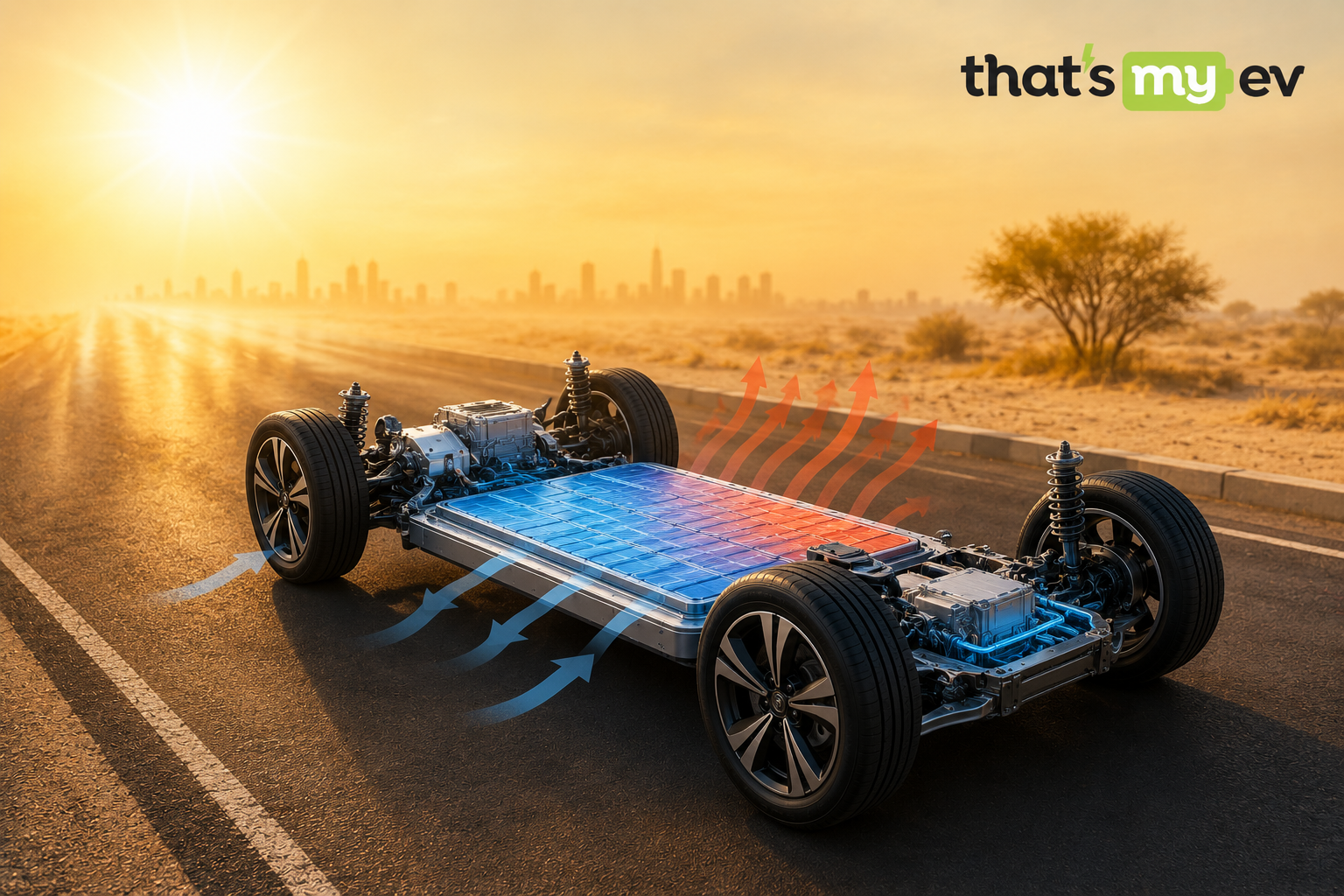
India's summers are brutal, with 45°C in Delhi, 42°C in Hyderabad, and 38°C in Mumbai. EV owners in these conditions face a real question: what does extreme heat actually do to your car, and how do you manage it?
The answer is more nuanced than the headlines suggest.
What Heat Actually Does to an EV Battery
Above 35°C, EV lithium-ion batteries begin showing faster discharge rates, reduced energy storage capacity, and inefficient power delivery over time. Temperatures exceeding 40°C threaten the integrity of the anode's passive emission layer and accelerate electrolyte depletion.
In practice for an Indian summer day: a Nexon EV delivering 300 km in February may deliver 240–260 km in May, a 15–20% range reduction from a combination of AC load and thermal battery effects.
The good news: modern EVs have active thermal management systems, the liquid cooling circuits that regulate battery temperature during both charging and driving. These systems largely prevent the dangerous overheating scenarios. The range reduction is real; the catastrophic failure risk is not, for any modern EV with a proper TMS.
The AC Factor: Bigger Than You Think
AC usage draws energy directly from the battery. In mild conditions, an EV might use 15 kWh per 100 km. On a 45°C day with the AC running hard to bring the cabin to 22°C, that figure rises to 18–20 kWh per 100 km, a 20–33% increase in energy consumption from AC load alone.
Increased AC use to combat the heat naturally leads to greater reliance on air conditioning, which consumes significant battery power and directly impacts battery performance in high temperatures.
Practical tip: pre-cool the cabin while the car is still plugged in. Most modern EVs, including the Nexon EV, BE 6, and Hyundai Creta Electric, allow cabin pre-cooling via app while connected to the charger. This means you start driving in a cool cabin without draining the battery for cabin cooling.
Parking: The Single Most Important Factor
Leaving an electric car under direct sunlight for long hours can increase the battery temperature, which negatively impacts efficiency. Choosing shaded or covered parking helps keep the battery cooler and supports better performance.
On a 45°C day, a car parked in direct sun can reach 70–80°C inside, and the battery pack experiences external ambient temperatures that stress the thermal management system even while parked. Covered parking in Indian summers isn't just about comfort; it's battery maintenance.
An EV uses its battery power to keep the battery cool even when parked. This is why keeping the car charged to at least 50% or plugged in with an 80% charge limit is recommended in summer. A nearly empty battery on a hot day has no power reserve for thermal management.
Charging in Summer: The Right Way
Fast charging, though convenient, should be used sparingly during summer. It generates additional heat within the battery, which can affect both range and battery health. Using a standard home charger, even if slower, is generally better for maintaining long-term performance.
Time your home charging for the coolest part of the day: late night or early morning when ambient temperature drops to 25–30°C. This is also when most cities have lower electricity demand and potentially cheaper off-peak rates.
Charge your EV battery to 80% instead of 100% in summer. A full charge creates more internal resistance and heat, further stressing the battery. The 20% buffer also gives the thermal management system room to operate.
LFP vs NMC: Which Battery Chemistry Handles Indian Heat Better?
LFP batteries stand up better to heat. If you frequently leave your car in the sun or let the battery charge drop under 20%, consider an EV with an LFP battery, since this type degrades less in the heat.
In India, Tata's Nexon EV, Punch EV, and Tiago EV use LFP chemistry, which is well-suited to India's heat. BYD's Blade Battery (Seal, Atto 3) is also LFP. Mahindra's BE 6 and Hyundai's Creta Electric use NMC, which is more energy-dense but slightly more heat-sensitive. For buyers in Rajasthan, UP, or AP where temperatures regularly cross 45°C, LFP chemistry is worth factoring into the purchase decision.
Summer Survival Checklist for Indian EV Owners
Park in shade or covered parking whenever possible
Pre-cool cabin via app while still plugged in
Charge to 80% daily, not 100%, during May–June
Schedule home charging for late night (post 11 PM)
Avoid DC fast charging immediately after a hot drive; rest 5 minutes first
Keep tyres inflated to spec, since heat expands tyre pressure, which affects range efficiency
Don't let the battery drop below 20% in peak summer
If leaving the car parked for 3+ days: charge to 50% and leave plugged in if possible
FAQs
How much range does an EV lose in Indian summer heat? Extreme heat can reduce an EV's driving range by up to 20%, due to increased AC use and direct battery thermal effects. A car delivering 300 km in winter may deliver 240–260 km on a 45°C day.
Is it safe to charge an EV in 45°C Indian summer? Yes. Modern EVs have thermal management systems that regulate battery temperature during charging. Home AC charging at night, when ambient temperatures drop, is safer and healthier for the battery than DC fast charging during peak afternoon heat.
Which EV battery is best for Indian summer conditions? LFP (Lithium Iron Phosphate) batteries handle heat better than NMC packs. Tata's Ziptron EVs (Tiago, Punch, Nexon) and BYD's Blade Battery-equipped cars (Seal, Atto 3) use LFP chemistry.
Should I pre-cool my EV before driving in summer? Yes. Pre-cool the cabin while the car is still plugged in. Models like the Nexon EV, BE 6, and Creta Electric allow app-based pre-cooling, so you start in a cool cabin without draining the battery.
Does covered parking really matter for an EV in Indian summers? Yes. A car in direct 45°C sun can reach 70 to 80°C inside, which stresses the battery's thermal management even while parked. Covered parking in summer is battery maintenance, not just comfort.
How much does air conditioning cut EV range in summer? Running the AC hard on a 45°C day pushes consumption from about 15 kWh per 100 km to 18 to 20 kWh, a 20 to 33 percent increase from AC load alone, on top of battery thermal effects.
👉 Find the best EV for India's climate conditions on ThatsmyEV.
Comments
Write your comment on EV in Extreme Indian Heat: Summer Survival Guide
No comments yet. Be the first to share your thoughts.