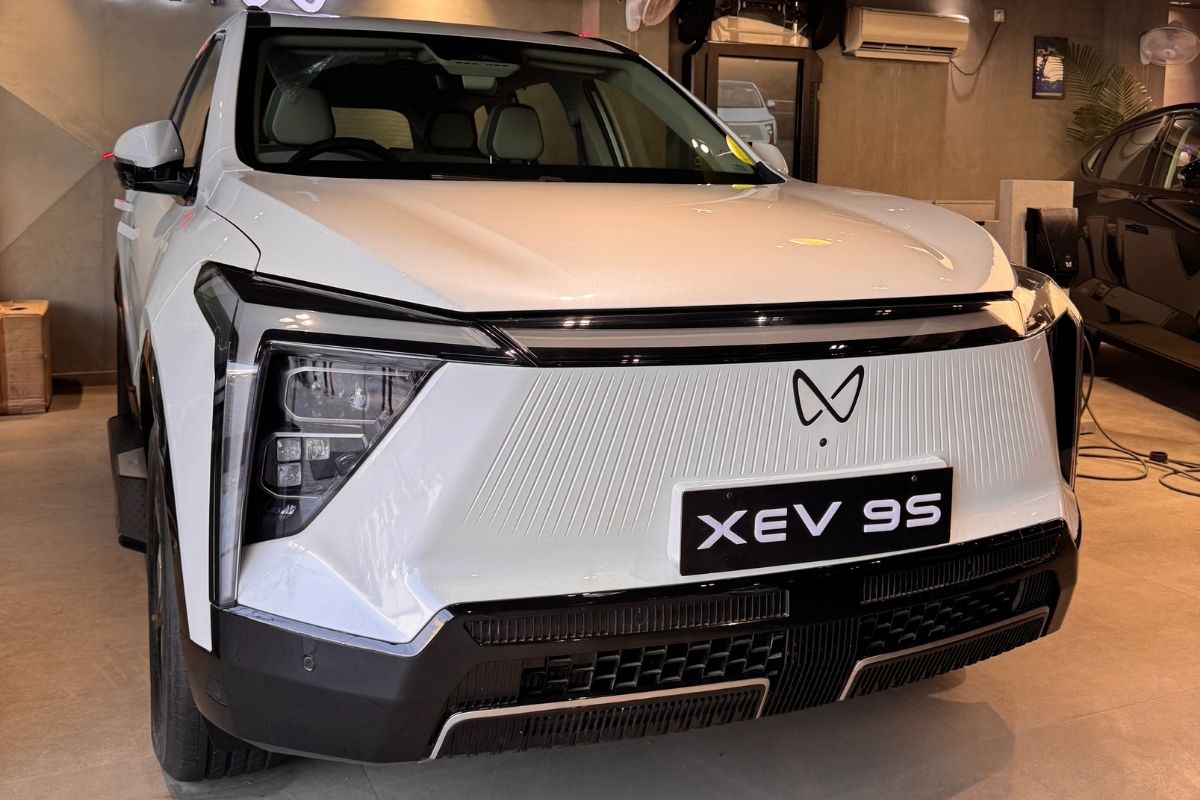
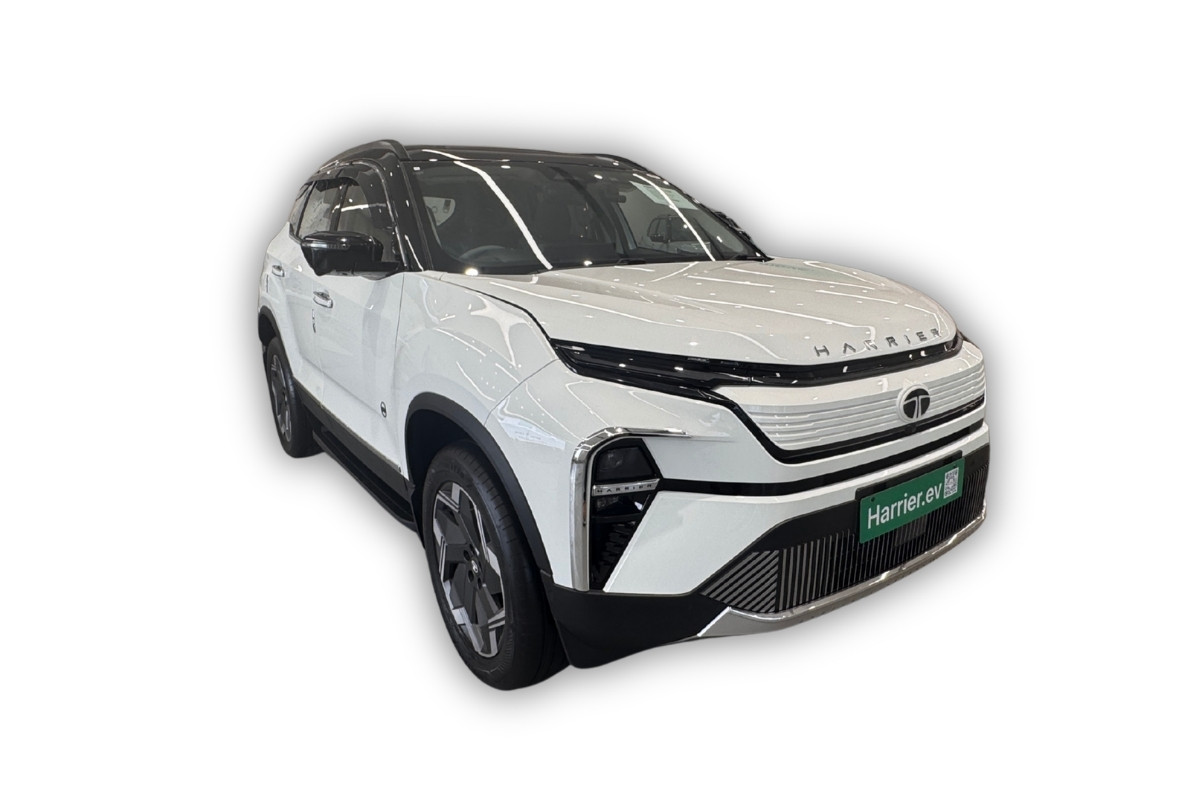
Mahindra XEV 9S vs Tata Harrier EV: Which Electric SUV Should You Buy?
Rahul ShonakPublished On 25 August 2026, 00:32 IST· Updated 3 September 2026, 13:22 IST
Short answer
The Tata Harrier EV is the better buy for most families in 2026. The Tata Harrier EV costs ₹4.41 lakh less to start, matches the range at 627 km MIDC against 620 km, and offers AWD from ₹28.49 lakh. The Mahindra XEV 9S wins if you need seven seats, 175 kW fast charging and air suspension.
Tata Harrier EV wins, 6 categories to 4Spec categories won: Mahindra XEV 9S 9 – 1 Tata Harrier EV
The Tata Harrier EV takes the value argument decisively: ₹21.49 lakh buys a 60 kWh Fearless LR RWD, and ₹25.49 lakh buys the 75 kWh Accomplished LR RWD with 627 km MIDC, which is where the Mahindra XEV 9S range only begins. The Harrier EV also runs a bigger 75 kWh pack, a slightly longer certified range and a larger 502-litre boot with a genuine 5-seat SUV footprint. The Mahindra XEV 9S answers with the one thing the Harrier EV cannot offer at any price: a usable third row, plus 175 kW DC charging that adds 80% in about 20 minutes, 210 km/h top speed, standard AWD on Pack Three and air suspension. If you need seven seats or you charge on the move often, buy the XEV 9S. If you carry five and want maximum electric SUV per rupee, buy the Harrier EV.
Category-by-category scorecard
Price
Mahindra XEV 9S · ₹0.84 Lakh cheaper at entry
Tata Harrier EV starts at ₹21.49 lakh against ₹25.90 lakh for the Mahindra XEV 9S, and its top variant undercuts the XEV 9S by ₹5.67 lakh.
Certified range
Mahindra XEV 9S · 57 km more
Tata Harrier EV 75 kWh is rated 627 km MIDC; the Mahindra XEV 9S 79 kWh is rated 620 km MIDC. Effectively a tie, decided on the cheaper price of entry.
Real-world range
Mahindra XEV 9S · 40 km more (est.)
At roughly 28% below MIDC, Tata Harrier EV returns about 450 km against about 445 km for the Mahindra XEV 9S.
Charging
Mahindra XEV 9S · 5 minutes faster
Mahindra XEV 9S accepts 175 kW DC and completes 0-80% in about 20 minutes; Tata Harrier EV takes about 60 minutes on its DC peak.
Performance
Mahindra XEV 9S · 22 km/h higher top speed
Mahindra XEV 9S tops out at 210 km/h and hits 100 km/h in 5.8 s; Tata Harrier EV manages 180 km/h and 6.3 s in AWD form.
Seating & practicality
Mahindra XEV 9S · 7 seats vs 5
Mahindra XEV 9S offers a third row and 600 litres of boot with it folded; Tata Harrier EV is a 5-seater only, though with a larger 502-litre five-up boot.
Boot space (5-up)
Mahindra XEV 9S · 25 litres more
With all seats in use the Tata Harrier EV's boot is the more usable of the two; the XEV 9S third row eats most of its luggage bay.
Features & tech
Mahindra XEV 9S · Triple display, air suspension
Mahindra XEV 9S adds a triple-screen dashboard, Harman Kardon audio and air suspension; Tata Harrier EV counters with a 14.5-inch Samsung QLED screen and Summon Mode.
Safety
Tata Harrier EV · 540° view + Level 2 ADAS
Both carry Level 2 ADAS, but the Tata Harrier EV's 540-degree surround view with transparent bonnet view is the more complete off-road and city aid package at a lower price.
Value for money
Mahindra XEV 9S · 3.9 km more range per ₹ lakh
Tata Harrier EV delivers the same certified range, the same Level 2 ADAS and AWD availability for materially less money.
Who should buy which?
Buy the Mahindra XEV 9S if…
You need a genuine third row and a seven-seat electric SUV.
You road-trip often and want 175 kW DC charging for 20-minute top-ups.
You want air suspension, a triple-display cabin and Harman Kardon audio.
You want the quickest, fastest electric SUV of the two at 5.8 s and 210 km/h.
Mahindra XEV 9S vs Tata Harrier EV: the key numbers
Key specifications compared between the Mahindra XEV 9S and the Tata Harrier EV
Specification
Mahindra XEV 9S
Tata Harrier EV
Winner
Ex-showroom price
₹20.65 Lakh - ₹30.15 Lakh
₹21.49 Lakh - ₹28.99 Lakh
Mahindra XEV 9S
Battery packs
59 kWh / 70 kWh / 79 kWh
65 kWh / 75 kWh
Mahindra XEV 9S
Certified range
521 km / 600 km / 679 km (MIDC)
538 km / 627 km (MIDC)
Mahindra XEV 9S
Real-world range (est.)
490 km
450 km
Mahindra XEV 9S
Efficiency (km/kWh)
8.6
8.3
Mahindra XEV 9S
Running cost (₹/km)
1.29
1.33
Mahindra XEV 9S
Top speed (km/h)
202
180
Mahindra XEV 9S
Boot space (litres)
527
502
Mahindra XEV 9S
Variants
10
6
Mahindra XEV 9S
Which is cheaper, Mahindra XEV 9S or Tata Harrier EV?
Tata Harrier EV is cheaper. Tata Harrier EV starts at ₹21.49 lakh ex-showroom against ₹25.90 lakh for Mahindra XEV 9S, a ₹4.41 lakh gap. At the top of each range, Tata Harrier EV asks ₹30.23 lakh and Mahindra XEV 9S ₹35.90 lakh.
On-road, add roughly 8-10% for registration, insurance and handling, with road tax waived on electric cars in Delhi and Maharashtra. That puts a Tata Harrier EV Accomplished LR RWD at roughly ₹27.6 lakh on-road against about ₹32.4 lakh for a Mahindra XEV 9S Pack Two.
The gap matters on EMI. At 9% over five years, ₹4.41 lakh of extra principal is close to ₹9,150 a month, which pays for a year of home charging several times over.
Which has better real-world range, Mahindra XEV 9S or Tata Harrier EV?
Tata Harrier EV has marginally better real-world range. Tata Harrier EV 75 kWh returns roughly 450 km in Indian conditions from a 627 km MIDC rating, while Mahindra XEV 9S returns roughly 445 km from a 620 km MIDC rating. The difference is within test tolerance.
Thatsmyev estimates real-world range at about 28% below the MIDC figure to account for air conditioning, city traffic and expressway speeds. Both SUVs comfortably clear a 400 km day on a single charge.
The entry Tata Harrier EV Fearless LR RWD uses a smaller 60 kWh pack rated at 500 km MIDC, or roughly 360 km real-world. The range parity applies to the 75 kWh variants only. AWD versions of both cars give up 30-40 km.
Which charges faster, Mahindra XEV 9S or Tata Harrier EV?
Mahindra XEV 9S charges much faster. Mahindra XEV 9S accepts up to 175 kW DC and completes 0-80% in about 20 minutes, against about 60 minutes for the Tata Harrier EV. On AC, both take a full night at 10.7 to 11 hours.
The 40-minute difference is the single strongest argument for the XEV 9S. On a Delhi-Jaipur-Udaipur run, the XEV 9S turns charging stops into coffee breaks while the Harrier EV asks for a proper meal halt.
Both use a CCS2 port and both support vehicle-to-load, so either will power appliances at a campsite. Charging speed only matters if you regularly drive beyond one charge; for home-charged commuters the two are equivalent.
Which is more practical for a family, Mahindra XEV 9S or Tata Harrier EV?
Mahindra XEV 9S is more practical for larger families. Mahindra XEV 9S seats seven across three rows on the INGLO platform. Tata Harrier EV seats five only, but offers a bigger 502-litre boot when all occupied seats are in use.
If you routinely carry six or seven people, the decision is already made: the Harrier EV has no third row at any price, and no seven-seat electric SUV exists under ₹25 lakh in India.
For a family of four or five, the Harrier EV is the more comfortable choice. Its boot is deeper and squarer, the rear bench is wider, and the money saved buys a home charger and several years of running costs.
Which is better to drive, Mahindra XEV 9S or Tata Harrier EV?
Mahindra XEV 9S is the quicker car. Mahindra XEV 9S makes 375 PS and 520 Nm through AWD for 0-100 km/h in 5.8 seconds and 210 km/h. Tata Harrier EV makes 390 PS and 700 Nm in AWD form for 6.3 seconds and 180 km/h.
On paper the Harrier EV has the bigger torque number at 700 Nm, and its Boost mode feels stronger off the line, but the heavier seven-seat XEV 9S still edges the sprint thanks to its lower kerb weight per PS and taller gearing.
Ride quality favours the XEV 9S, which offers air suspension on higher packs. The Harrier EV's conventional setup is well judged and better suited to broken Indian roads at low speed.
Which variant of each should you buy?
Buy the Tata Harrier EV Accomplished LR RWD at ₹25.49 lakh or the Mahindra XEV 9S Pack Two at ₹29.90 lakh. Both add the 75-plus kWh battery, Level 2 ADAS and the full screen and camera suites without paying for top-trim AWD.
On the Harrier EV, skip the 60 kWh Fearless variants unless your driving is city-only; the 75 kWh pack is where the 627 km headline lives. The Empowered LR AWD at ₹28.49 lakh is worth it only if you genuinely need all-wheel drive.
On the XEV 9S, Pack One is well equipped but Pack Two adds the comfort and audio kit that suits the price bracket. Pack Three AWD at ₹35.90 lakh is a want, not a need.
Full specification comparison
Full specification table comparing the Mahindra XEV 9S and the Tata Harrier EV
Specification
Mahindra XEV 9S
Tata Harrier EV
Safety
Airbag Count
7
7
Airbag Details
Front, Side, Curtain, Driver Knee
Dual Front, Side, Curtain, Driver Knee
ADAS Level
Level 2+ (5 Radars + 1 Vision Camera)
Level 2
ADAS Features List
L2 list plus BSD, FCTA, RCTA, RCW, Lane Centring, Emergency Steering Assist, Driver Initiated Auto Lane Change
ACC w/ Stop & Go, TSR, ISA (TSR), ISA (Map), LCS, ASA, LDW, LKA, FCW (Ped/Car/Cyl), AEB (Ped/Car/Cyl), RCW, RCTA, BSD, HBA, LCA, OSA, DOA, BSM (Blind Spot View Monitor)
LightMeUp (16 Million Colours, integrated in Interiors & Skyroof)
Multi Mood (Dashboard, Sunroof, Door & Console)
Chassis & Wheels
Front Suspension
McPherson Strut iLink Independent Suspension with Stabilizer Bar
Independent McPherson Strut with Stabilizer Bar
Rear Suspension
Multi-Link (5-link) Independent Suspension with Stabilizer Bar
Independent Multi-Link with Stabilizer Bar
Suspension Technology
Intelligent Adaptive Suspension with MTV-CL
FDD (Frequency Dependent Damping) with MTV-CL
Front Brakes
Disc
Disc
Rear Brakes
Disc
Disc
Wheel Size & Type
R18 Alloy
R19 Alloy with Aero Inserts
Tyre Size
235/60 R18
245/55 R19
Spare Wheel Size/Type
T 135/80 R18 (Space-saver)
LT 155/90 R18 (Space-saver)
Pros and cons
Mahindra XEV 9S
Only true seven-seat electric SUV of the two
175 kW DC charging adds 80% in about 20 minutes
375 PS AWD, 5.8 s to 100 km/h and 210 km/h top speed
Air suspension and a triple-display cabin on higher packs
8-year unlimited-kilometre battery warranty
₹4.41 lakh more expensive to start than the Harrier EV
Only three variants, so less scope to tune the spend
Third row eats most of the luggage bay when in use
Efficiency of 7.8 km/kWh trails the Harrier EV
Tata Harrier EV
₹21.49 lakh entry price for a full-size electric SUV
627 km MIDC from the 75 kWh pack, the longest here
502-litre boot plus a 67-litre frunk
540-degree surround view and Level 2 ADAS
AWD available from ₹28.49 lakh
Five seats only; no third-row option at any price
DC charging peaks well below the XEV 9S at roughly 60 minutes to 80%
60 kWh entry variants give up 127 km of certified range
No air suspension on any variant
Mahindra XEV 9S vs Tata Harrier EV: frequently asked questions
Is the Tata Harrier EV better than the Mahindra XEV 9S?
For most five-seat buyers, yes. The Tata Harrier EV costs ₹4.41 lakh less to start, is rated 627 km MIDC against 620 km for the Mahindra XEV 9S, and offers a larger 502-litre boot. The Mahindra XEV 9S is the better choice if you need seven seats or 175 kW fast charging.
What is the price difference between Mahindra XEV 9S and Tata Harrier EV?
The Tata Harrier EV starts at ₹21.49 lakh ex-showroom and the Mahindra XEV 9S at ₹25.90 lakh, a difference of ₹4.41 lakh. At the top of each range the gap widens to ₹5.67 lakh, ₹30.23 lakh against ₹35.90 lakh.
Which has more range, Mahindra XEV 9S or Tata Harrier EV?
The Tata Harrier EV has slightly more range at 627 km MIDC from its 75 kWh pack, against 620 km for the 79 kWh Mahindra XEV 9S. In real Indian conditions expect roughly 450 km from the Harrier EV and roughly 445 km from the XEV 9S.
Which of the two is a seven-seater?
Only the Mahindra XEV 9S is a seven-seater. It uses the INGLO platform with three rows of seating. The Tata Harrier EV is a five-seat SUV and does not offer a third row on any variant.
Which charges faster, Mahindra XEV 9S or Tata Harrier EV?
The Mahindra XEV 9S charges faster. It accepts up to 175 kW DC and completes 0-80% in about 20 minutes, against about 60 minutes for the Tata Harrier EV. On a home AC charger both take a full night, 11 hours and 10.7 hours respectively.
Which is quicker, the Mahindra XEV 9S or the Tata Harrier EV?
The Mahindra XEV 9S is quicker, at 5.8 seconds to 100 km/h and 210 km/h flat out. The Tata Harrier EV AWD takes 6.3 seconds and is limited to 180 km/h, despite making more torque at 700 Nm.
Do both SUVs get all-wheel drive?
Yes, but differently. The Mahindra XEV 9S offers AWD on Pack Three at ₹35.90 lakh. The Tata Harrier EV offers RWD from ₹21.49 lakh and AWD on the Empowered LR AWD variants from ₹28.49 lakh.
Which variant of the Tata Harrier EV should I buy?
Buy the Accomplished LR RWD at ₹25.49 lakh. It carries the 75 kWh battery for the full 627 km MIDC rating along with Level 2 ADAS and the 14.5-inch QLED screen, without paying the AWD premium.
Which variant of the Mahindra XEV 9S should I buy?
Buy Pack Two at ₹29.90 lakh. It adds the comfort, audio and screen kit over Pack One while keeping the same 79 kWh battery and 620 km MIDC rating. Pack Three AWD at ₹35.90 lakh is worth it only if you need all-wheel drive.
Which is cheaper to run per kilometre?
The Tata Harrier EV, at roughly ₹0.95 per kilometre on home charging at ₹8 per unit, against roughly ₹1.03 per kilometre for the Mahindra XEV 9S. Over 15,000 km a year that is a saving of about ₹1,200.
Mahindra XEV 9S vs Tata Harrier EV, summarised: the Tata Harrier EV costs ₹21.49 to ₹30.23 lakh ex-showroom, carries a 60 kWh or 75 kWh battery, is rated up to 627 km MIDC for roughly 450 km real-world, charges 0-80% in about 60 minutes, seats five and offers a 502-litre boot. The Mahindra XEV 9S costs ₹25.90 to ₹35.90 lakh, carries a 79 kWh battery rated 620 km MIDC for roughly 445 km real-world, charges 0-80% in about 20 minutes at 175 kW, seats seven and hits 100 km/h in 5.8 seconds. Buy the Tata Harrier EV for value and boot space; buy the Mahindra XEV 9S for seven seats and fast charging.
Specifications and prices are read live from the ThatsmyEV vehicle database, the same source as our model pages, and are cross-checked by ThatsmyEV editors. No brand pays to appear here and no verdict is sponsored. Real-world range is a ThatsmyEV estimate at roughly 28% below the certified MIDC figure.
We'd like to use Meta advertising cookies to measure how our ads perform. You can change this anytime from "Cookie settings" in the footer. Cookie Policy