Mahindra BE 6 Sporteq Launched: ₹11.45 Lakh With Battery Lease
Key takeaways
Mahindra introduced the BE 6 Sporteq series on 15 August 2026 with eight variants: ONE, TWO, THREE, THREE+, FOUR, FE, FE FOUR and Launch Edition (Mahindra claimed).
Entry price is ₹11.45 lakh ex-showroom for the ONE with the 59 kWh pack on Battery as a Service, where the battery is billed at ₹3.75 per km against an assumed 60 km a day (Mahindra claimed).
The same ONE variant with the battery bought outright is ₹19.45 lakh ex-showroom. The gap between the two is ₹8 lakh (Mahindra claimed).
On Mahindra’s own usage assumption, the battery subscription costs ₹82,125 a year, so the ₹8 lakh saving is erased in roughly 9 years 9 months, or 2,13,333 km (our estimate).
A 70 kWh pack joins the BE 6 for the first time, priced from ₹22.95 lakh on the THREE.
Certified range on the carried-over packs is 548 km for the 59 kWh and 683 km for the 79 kWh, both MIDC Part 1 plus Part 2, ARAI certified (certified).
The Formula E Freedom Edition claims 0 to 100 kmph in 6.44 seconds with Acceleration Boost, against 6.7 seconds for the 210 kW BE 6 in Mahindra’s own brochure (Mahindra claimed).
Deliveries begin on 26 August 2026.
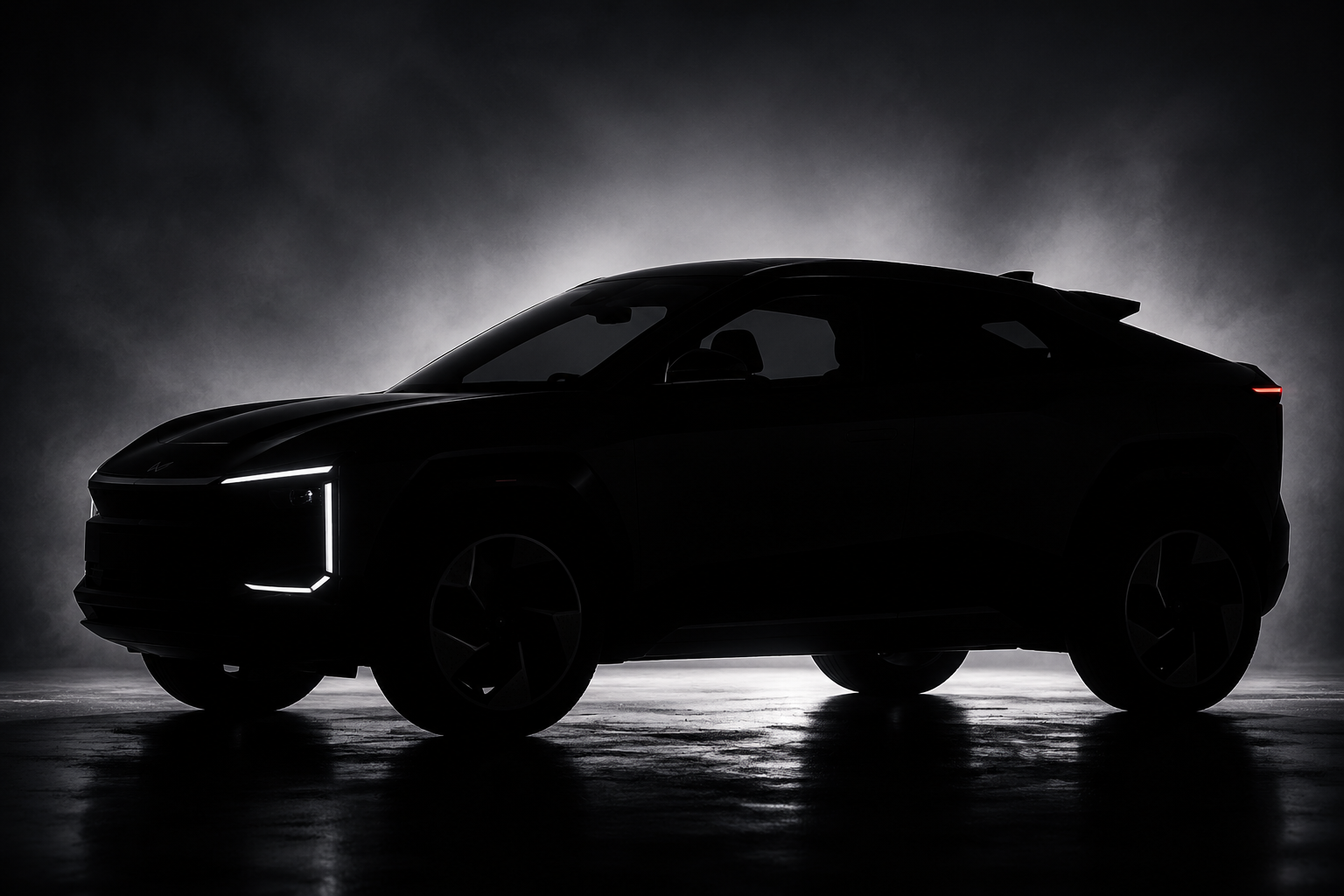
Mahindra BE 6 Sporteq Launched: ₹11.45 Lakh With Battery Lease
By Rahul Shonak · 15 August 2026 · 9 min read · News, New Launches
Mahindra’s ₹11.45 lakh headline for the BE 6 Sporteq is a battery subscription price, not the price of a car you own outright. The same ONE variant with the same 59 kWh pack costs ₹19.45 lakh ex-showroom if the battery comes with it, a gap of ₹8 lakh that Mahindra recovers at ₹3.75 per kilometre for as long as you keep the car.
The company introduced the Sporteq series on 15 August 2026 as a reworking of the Mahindra BE 6 line that went on sale in November 2024, and it starts deliveries on 26 August 2026. Eight variants replace the old Pack ONE to Pack THREE ladder, a 70 kWh battery joins the 59 kWh and 79 kWh packs, and four new paint options take the total to 12.
None of that is a new car. The Sporteq is a repricing and repackaging of hardware Mahindra has been building for close to two years, with a software layer bolted on top and a subscription price used as the advertised number. Both halves of that sentence matter to anyone about to book one, so this piece separates what Mahindra has actually confirmed from what it has left open.
What Mahindra has confirmed
The 15 August 2026 press release confirms the variant structure, the prices, the colours and the delivery date. It confirms very little else, and specifically it does not restate range, motor output or charging figures for the Sporteq series.
Mahindra says every variant from TWO upwards gets a three-screen coast-to-coast display, while the Formula E Freedom Edition keeps the original two-screen cockpit and halo. The six TEQ suites run on MAIA, the company’s in-house AI architecture, and cover voice (built with Google Gemini), in-car gaming, a digital car key across iPhone, Apple Watch, Android and Samsung devices, and a Secure360 Pro camera system with audio relay.
Mahindra also states that the new software features will reach existing BE 6, XEV 9e and XEV 9S owners over the air in phases from January 2027, with the exact feature set varying by model and variant. It has not published which features land on which car, which is the detail those owners will care about.
Mahindra BE 6 Sporteq: variant-wise ex-showroom prices
These are Mahindra’s own ex-showroom figures from the 15 August 2026 release, reproduced as published. The 59 kWh BaaS column is the battery subscription price; the other three columns are the outright price with the battery included.
Variant | 59 kWh (BaaS) | 59 kWh | 70 kWh | 79 kWh |
ONE | ₹11.45 lakh | ₹19.45 lakh | – | – |
TWO | ₹12.95 lakh | ₹20.95 lakh | – | – |
THREE | – | ₹21.95 lakh | ₹22.95 lakh | – |
THREE+ | – | – | ₹23.95 lakh | ₹24.95 lakh |
FOUR | – | – | – | ₹26.95 lakh |
Launch Edition | – | – | – | ₹26.95 lakh |
FE (Formula E Freedom) | – | – | – | ₹24.45 lakh |
FE FOUR | – | – | – | ₹26.95 lakh |
All figures ex-showroom, from Mahindra’s 15 August 2026 release. Prices exclude the wall charger and its installation. The BaaS column assumes the battery at ₹3.75 per km on 60 km a day.
Caveat: the two price columns are not like-for-like The ₹11.45 lakh and ₹19.45 lakh figures describe the same car with two different ownership structures, not two trim levels. On the BaaS price you do not own the battery and you pay for it per kilometre for as long as you keep the vehicle. Comparing the ₹11.45 lakh figure against any rival’s full purchase price is comparing a part-payment to a total. A second mismatch: Mahindra’s November 2024 launch release put the BE 6 at ₹18.90 lakh introductory for the entry 59 kWh car. The Sporteq ONE at ₹19.45 lakh outright is not a clean successor to that number, because the variant structure changed and intermediate revisions were made. Treat any year-on-year price comparison on this car as indicative. |
The ₹3.75 per km battery: what the subscription actually costs
Battery as a Service takes ₹8 lakh off the ONE and the TWO by leaving the battery on Mahindra’s books. You pay ₹3.75 per kilometre for it, and Mahindra’s own footnote frames that against 60 km a day. Run that forward and the arithmetic is not complicated.
At 60 km a day the battery costs ₹225 a day, ₹6,750 a month and ₹82,125 a year. We estimate the ₹8 lakh upfront saving is gone in about 9 years 9 months, or 2,13,333 km, whichever you reach first. Below that mileage the subscription is cheaper; above it, buying the battery is.
One question decides whether that maths holds, and Mahindra has not answered it. The release does not say whether you are billed on the kilometres you actually drive or against a 60 km a day minimum. A 25 km a day city user pays ₹34,219 a year on the first basis and ₹82,125 on the second, and that difference is larger than most people’s annual running cost. We have asked and will update this piece when Mahindra responds.
Line | Figure |
Outright price, ONE with 59 kWh | ₹19.45 lakh ex-showroom |
BaaS price, ONE with 59 kWh | ₹11.45 lakh ex-showroom |
Upfront difference | ₹8.00 lakh |
Battery rate | ₹3.75 per km |
Usage Mahindra assumes | 60 km a day |
Battery cost at that usage | ₹225 a day, ₹6,750 a month, ₹82,125 a year |
Time to erase the ₹8 lakh saving | about 9 years 9 months |
Distance to erase the ₹8 lakh saving | about 2,13,333 km |
Billing basis (actual km or 60 km a day floor) | Not published |
Mahindra BE 6 Sporteq: key specifications
Mahindra’s 15 August 2026 release covers variants, prices and features. It restates no powertrain, range or charging figure, so the rows below come from Mahindra’s own BE 6 brochure and earlier releases and are marked accordingly. Where a figure has not been mapped to the new variant names by Mahindra, the table says so rather than assuming carryover.
Item | Figure |
Battery packs offered | 59 kWh, 70 kWh, 79 kWh |
Certified range, 59 kWh | 548 km, MIDC Part 1 plus Part 2 |
Certified range, 70 kWh | Not published |
Certified range, 79 kWh | 683 km, MIDC Part 1 plus Part 2 |
Certified range, 79 kWh (launch release) | 682 km, MIDC Part 1 plus Part 2 |
Motor power | 170 kW on the lower packs, 210 kW on the higher |
Torque | 380 Nm |
0 to 100 kmph | 6.7 seconds on the 210 kW car |
0 to 100 kmph, FE with Acceleration Boost | 6.44 seconds |
DC fast charge, 20 to 80 per cent | 20 minutes on a 180 kW input |
AC charge, 0 to 100 per cent | 6 hours on 11.2 kW, 8.7 hours on 7.2 kW |
Boot and frunk | 455 litres and 45 litres |
Wheelbase | 2,775 mm |
Ground clearance | 207 mm, 222 mm measured at the battery |
Bharat NCAP | Five star. 31.97 of 32 adult, 45 of 49 child |
Battery warranty | Lifetime for the first private owner, then 10 years or 2,00,000 km |
Colours | 12 options, four of them new |
Deliveries begin | 26 August 2026 |
No ThatsMyEV measured figure appears in this table. We have not yet driven a Sporteq-series car, and we do not publish an estimate in a column that readers will read as a test result.
Range: what is certified and what is not
Mahindra publishes no certified range for the 70 kWh pack, which is the one genuinely new piece of hardware in the Sporteq series. It appeared first on the XEV 9S in November 2025, where the company quoted a generic 500 km real-world figure and no certification cycle at all. Until a homologation listing or an updated brochure appears, anyone buying the 70 kWh THREE at ₹22.95 lakh is buying an unquantified pack.
The two carried-over packs are documented. Mahindra’s BE 6 brochure lists 548 km for the 59 kWh and 683 km for the 79 kWh, both on MIDC Part 1 plus Part 2 and ARAI certified. Mahindra’s own November 2024 launch release quoted 682 km for the 79 kWh car, one kilometre lower, and the company has not explained which figure supersedes the other. It is a trivial gap in practical terms and a useful reminder that a brochure number is a document, not a measurement.
Caveat: MIDC figures are lab numbers MIDC Part 1 plus Part 2 is the Indian certification cycle, run on a dynamometer at controlled temperature with no climate load. It is the right figure to compare Indian cars against each other and the wrong figure to plan a drive around. Real-world range on a car of this weight and power sits materially below the certified number, and Mahindra’s own XEV 9S material quotes 500 km real-world against packs that certify far higher. The 70 kWh pack has no certified number at all. Not a lower one, not an estimated one: none has been published. We are not going to interpolate between 548 km and 683 km and present the result as range, because a linear interpolation across three different pack chemistries and two different motors is a guess wearing a decimal point. |
Price and rivals
Hyundai launched a battery subscription for the Creta Electric on 2 July 2026 at ₹10.99 lakh ex-showroom with the battery at ₹3.9 per kilometre, so Mahindra has undercut it on the rate by 15 paise and sits ₹46,000 above it on the sticker. The Creta Electric is a smaller car with an ARAI-certified 510 km on its 51.4 kWh pack, and Hyundai does not publish a usage assumption behind its per-km figure either.
Further up, the Tata Harrier.ev opened at ₹21.49 lakh for the Adventure 65 in June 2025 with an ARAI-certified 627 km, and Tata’s own price page listed a ₹21.69 lakh to ₹28.99 lakh band as at 15 August 2026. Prices have moved since the launch release, so treat the older figure as historical. You can compare them side by side on our tool, or browse every electric car under ₹20 lakh if the BaaS ONE has pulled the BE 6 into your budget.
Car | Price, ex-showroom | Certified range |
BE 6 Sporteq ONE, 59 kWh BaaS | ₹11.45 lakh plus ₹3.75 per km | 548 km, MIDC P1 plus P2 |
BE 6 Sporteq ONE, 59 kWh outright | ₹19.45 lakh | 548 km, MIDC P1 plus P2 |
BE 6 Sporteq FOUR, 79 kWh | ₹26.95 lakh | 683 km, MIDC P1 plus P2 |
Hyundai Creta Electric, BaaS | from ₹10.99 lakh plus ₹3.9 per km | up to 510 km, ARAI certified |
Tata Harrier.ev Adventure 65 | ₹21.49 lakh introductory, June 2025 | 627 km, ARAI P1 plus P2 |
Tata Harrier.ev, current listed band | ₹21.69 lakh to ₹28.99 lakh | 627 km, ARAI P1 plus P2 |
The two Harrier.ev rows disagree by ₹20,000 at the entry point because Tata’s introductory release and its live price page were published 14 months apart. We have printed both rather than picking one.
Working out which pack and which ownership structure fits your driving? Compare the BE 6 against its rivals, free |
What we still don’t know
Eight open items, in the order they matter to somebody deciding whether to book. Each one names what would settle it.
The certified range of the 70 kWh pack. Settled by an ARAI or homologation listing, or an updated Mahindra brochure.
Whether BaaS billing tracks actual kilometres driven or a 60 km a day minimum. Settled by the BaaS contract terms, which Mahindra has not published.
Whether the ₹3.75 per km rate is fixed for the contract term or revisable, and on what notice.
What happens to a BaaS battery on resale, and whether the lifetime battery warranty Mahindra offers first private owners applies to a pack it still owns.
How motor outputs map onto the new variant names. The 15 August 2026 release restates neither the 170 kW nor the 210 kW figure.
Booking amounts and whether bookings opened alongside the 15 August 2026 announcement.
Which Sporteq software features reach which existing BE 6, XEV 9e and XEV 9S variants from January 2027.
On-road prices, and the cost of the wall charger and its installation, which the quoted prices exclude.
Should you book now?
If you have already decided on a BE 6, the 26 August 2026 delivery date means waiting a fortnight costs you nothing and gets you the newer software stack. The harder call is the battery.
Buyers who cover more than about 60 km a day should take the battery outright. The subscription is priced for average use and stops being cheap the moment your commute is longer than average, and a car you fully own is simpler to sell. Buyers doing school runs and weekend errands in a two-car household are the ones the BaaS ONE was built for, and ₹11.45 lakh is a genuinely low entry point for a five-star electric SUV.
What should stop anyone signing on either basis is the contract. Mahindra has published a rate and a usage assumption and nothing about billing basis, rate revision or transfer, and those three terms decide the real cost of the cheaper car. Ask the dealer for the BaaS agreement in writing before you pay, and read the mileage clause first.
The ThatsMyEV Take
The Sporteq is a pricing exercise wearing a product launch’s clothes, and it is a shrewd one. Mahindra has taken a car that opened at ₹18.90 lakh in November 2024, moved the battery off the invoice, and put an ₹11.45 lakh number on a five-star electric SUV that has already sold more than 30,000 units alongside the XEV 9e in seven months, on Mahindra’s own count. The hardware underneath is the same INGLO car; the new 70 kWh pack and the TEQ software suites are real additions, but the headline is the battery subscription and everyone involved knows it.
Whether it works turns on a document Mahindra has not released. ₹3.75 per kilometre reads well against Hyundai’s ₹3.9, and it is the right rate to lead with. It is also meaningless without the billing basis: charged on actual kilometres, it is the best-value entry into this segment, and charged against a 60 km a day floor, it is a ₹82,125 annual bill that a low-mileage buyer would never have chosen. Publishing the rate and withholding the basis is the part of this launch we would push back on.
Our position as of 15 August 2026: if you drive more than 60 km a day, buy the 79 kWh FOUR at ₹26.95 lakh outright and ignore the subscription entirely. If you drive less than 40 km a day and have a second car, the BaaS ONE at ₹11.45 lakh is the cheapest sensible way into a five-star electric SUV in India, and worth the wait to 26 August 2026. Nobody should book the 70 kWh THREE at ₹22.95 lakh until Mahindra puts a certified range against that pack, because that is ₹1 lakh over the 59 kWh THREE for a number that does not yet exist on paper.
Frequently Asked Questions
What is the price of the Mahindra BE 6 Sporteq?
The BE 6 Sporteq range runs from ₹11.45 lakh to ₹26.95 lakh ex-showroom, as published by Mahindra on 15 August 2026. The ₹11.45 lakh entry point is the ONE variant with the 59 kWh pack on Battery as a Service, where the battery is billed separately at ₹3.75 per km. Bought outright with the battery, the same ONE is ₹19.45 lakh.
Why is the Mahindra BE 6 Sporteq priced at ₹11.45 lakh?
Because the battery is not included in that figure. Mahindra claims ₹11.45 lakh ex-showroom for the ONE on Battery as a Service and charges ₹3.75 per kilometre for the 59 kWh pack on top, against an assumed 60 km a day. The same variant with the battery included is ₹19.45 lakh, a difference of ₹8 lakh.
What is the range of the Mahindra BE 6 Sporteq?
Mahindra’s BE 6 brochure lists 548 km for the 59 kWh pack and 683 km for the 79 kWh pack, both ARAI certified on the MIDC Part 1 plus Part 2 cycle. No certified range has been published for the new 70 kWh pack, so that figure is unconfirmed. Lab cycle figures run well above real-world range.
When do Mahindra BE 6 Sporteq deliveries start?
Mahindra states that BE 6 Sporteq deliveries begin on 26 August 2026, timed to Onam. The series was introduced on 15 August 2026. Mahindra has not published a booking amount or confirmed whether bookings opened alongside the announcement, so check with a dealer before assuming a slot.
How many variants does the Mahindra BE 6 Sporteq have?
Eight, per Mahindra’s 15 August 2026 release: ONE, TWO, THREE, THREE+, FOUR, FE, FE FOUR and Launch Edition. They replace the earlier Pack ONE to Pack THREE structure. Twelve paint options are offered, four of them new: Rosso Impulso, Ruby Velvet, Graphite Storm and Firestorm Orange Satin.
Does the Mahindra BE 6 Sporteq get a new 70 kWh battery?
Yes. Mahindra lists a 70 kWh pack on the THREE at ₹22.95 lakh and the THREE+ at ₹23.95 lakh ex-showroom, the first time the BE 6 has offered it. The pack debuted on the XEV 9S in November 2025. Mahindra has published no ARAI-certified range for it, so its range remains unconfirmed.
Is the Mahindra BE 6 Sporteq BaaS cheaper than buying the battery?
It is cheaper below roughly 2,13,333 km, on our calculation. The subscription saves ₹8 lakh upfront and costs ₹3.75 per km, so at Mahindra’s assumed 60 km a day the battery bills ₹82,125 a year and erases that saving in about 9 years 9 months. Mahindra has not confirmed whether billing tracks actual kilometres.
Will existing Mahindra BE 6 owners get the Sporteq features?
The software ones, in phases from January 2027. Mahindra states that new technology and software features from the Sporteq series will reach existing BE 6, XEV 9e and XEV 9S customers over the air, with the feature set varying by model and variant. Hardware changes such as the three-screen display cannot be retrofitted this way.
What is the Mahindra BE 6 Sporteq Formula E Freedom Edition?
It is the performance variant of the series, sold as FE at ₹24.45 lakh and FE FOUR at ₹26.95 lakh ex-showroom with the 79 kWh pack. Mahindra claims 0 to 100 kmph in 6.44 seconds using an exclusive Acceleration Boost function. It keeps the original two-screen cockpit and halo rather than the new three-screen dashboard.
How safe is the Mahindra BE 6 Sporteq?
The BE 6 holds a five-star Bharat NCAP rating with 31.97 out of 32 for adult occupant protection and 45 out of 49 for child occupant protection, as certified by Bharat NCAP and quoted by Mahindra. That result was achieved on the existing BE 6. Mahindra has not indicated any structural change for the Sporteq series.
Mahindra BE 6 Sporteq vs Tata Harrier EV: which is cheaper?
The BE 6 Sporteq is cheaper at both ends. Mahindra claims ₹11.45 lakh with Battery as a Service and ₹19.45 lakh outright for the ONE, against Tata’s listed ₹21.69 lakh to ₹28.99 lakh band for the Harrier.ev as at 15 August 2026. The Harrier.ev is the larger car and claims an ARAI-certified 627 km.
Not sure whether to take the battery subscription or buy the pack? Ask a ThatsMyEV expert on WhatsApp |
Sources: Mahindra press release, "Mahindra introduces the BE 6 SPORTEQ", 15 August 2026, accessed 15 August 2026; Mahindra BE 6 brochure V29, accessed 15 August 2026; Mahindra BE 6e and XEV 9e launch release, 26 November 2024; Mahindra XEV 9S release, 27 November 2025; Mahindra Bharat NCAP release for the BE 6 and XEV 9e; Hyundai Motor India Battery as a Service release for the Creta Electric, 2 July 2026; Tata Motors Harrier.ev introductory price release, 23 June 2025, and the Tata.ev Harrier price page, accessed 15 August 2026. Break-even and annual-cost figures are our own calculation from Mahindra’s published rate and usage assumption; no ThatsMyEV instrumented measurement appears in this piece, because we have not yet driven a Sporteq-series car. Still open: certified range for the 70 kWh pack, and the BaaS billing basis, rate-revision and transfer terms, all of which sit in a contract Mahindra has not published.
Comments
Write your comment on Mahindra BE 6 Sporteq Price, Variants, Range: 15 August 2026
No comments yet. Be the first to share your thoughts.