BMW i7 Facelift Launched in India at ₹1.95 Crore
Quick Summary
BMW India launched the facelifted i7 on 11 September 2026 at ₹1.95 crore for the 50 xDrive M Sport and ₹2.65 crore for the M70 xDrive, ex-showroom (manufacturer claimed).
The outgoing i7 ranged from ₹2.10 crore to ₹2.58 crore, so the entry price fell by ₹15 lakh while the top variant rose ₹7 lakh (our arithmetic on BMW India pricing).
BMW assembles the 50 xDrive M Sport at its Chennai plant. The M70 xDrive arrives as a fully imported unit (the manufacturer claims).
Battery capacity rises to 112.5kWh from 101.7kWh, with 728km on the WLTP cycle for the 50 xDrive, which BMW says is 125km more than the outgoing car (manufacturer claimed).
The M70 xDrive makes 680hp and 1,015Nm in Sport mode, rising to 1,100Nm on Sport Boost, with 686km WLTP (manufacturer claimed).
BMW India has still published no ARAI- or India-certified range figure for either variant (unconfirmed).
Rear passengers get a 31.3-inch 8K Theatre Screen; the driver gets Panoramic iDrive with a 17.9-inch central display and a 14.6-inch passenger screen (manufacturer-claimed).
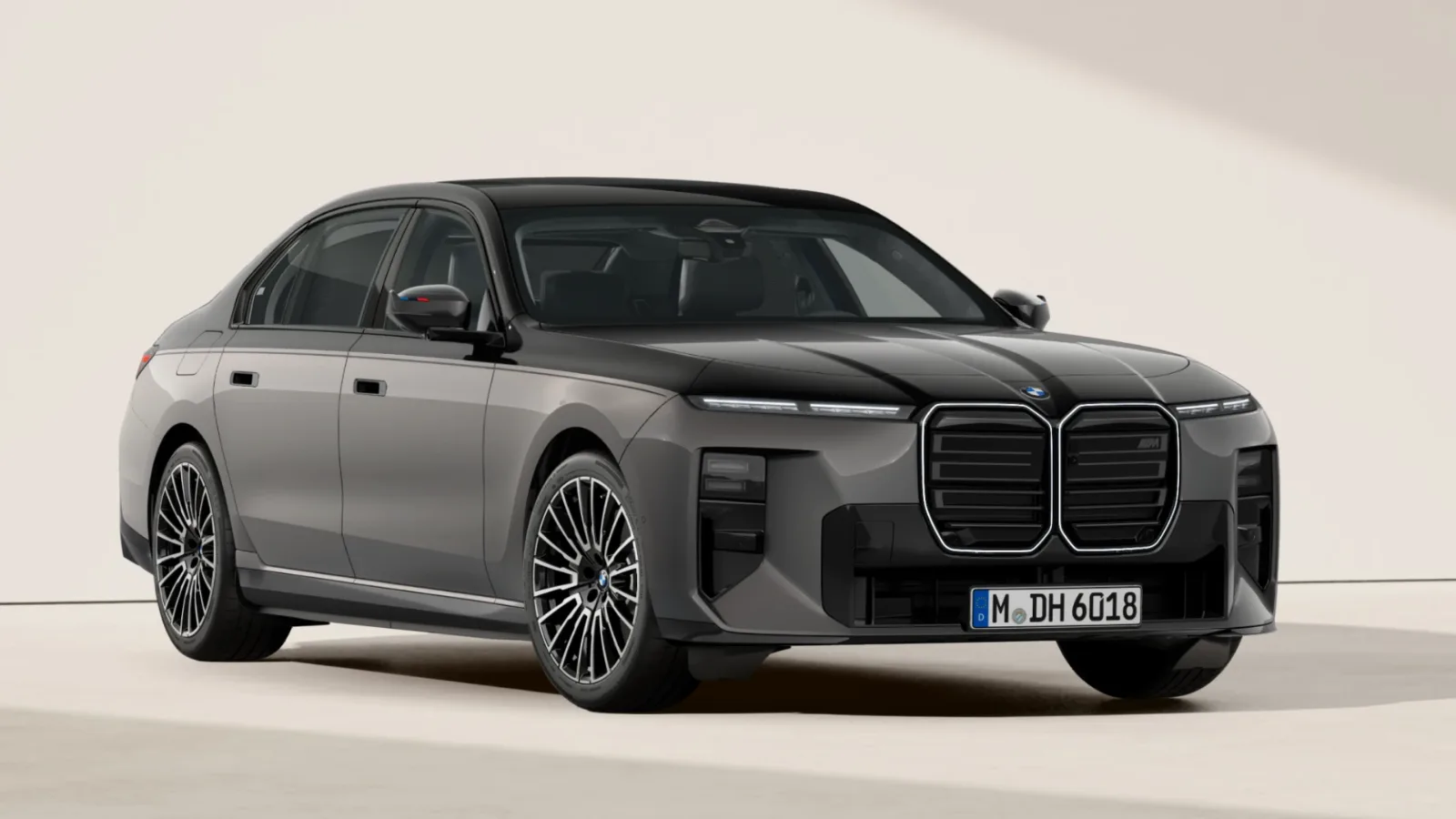
BMW i7 Facelift Launched in India at ₹1.95 Crore: The Entry Price Fell ₹15 Lakh While the Battery Grew
BMW India launched the facelifted i7 on 11 September 2026 at ₹1.95 crore ex-showroom, which is ₹15 lakh below the ₹2.10 crore the outgoing car started at. The battery got bigger, the drivetrain gained an axle, the cabin was rebuilt around a new display architecture, and the entry price went down. That combination is rare enough to be the story, and the reason for it is on the spec sheet rather than in the press release.
The range-topping M70 xDrive moved the other way, to ₹2.65 crore from ₹2.58 crore. So the price band widened at both ends rather than shifting. If you are shopping this end of the market, our electric cars by price listing has the full luxury set for comparison.
What it costs
Variant | Price, ex-showroom | Outgoing equivalent | Change |
i7 50 xDrive M Sport | ₹1.95 crore | ₹2.10 crore | Down ₹15 lakh |
i7 M70 xDrive | ₹2.65 crore | ₹2.58 crore | Up ₹7 lakh |
7 Series (petrol) | ₹1.95 crore | ₹1.85 crore | Up ₹10 lakh |
Launch prices from BMW India’s announcement of 11 September 2026. Outgoing prices from BMW India’s previous model listing. The change column is our own subtraction. All figures are ex-showroom and exclusive of the wall charger, registration, insurance, and statutory levies.
The explanation is assembly. BMW builds the i7 50 xDrive M Sport at its Chennai plant, as it did the outgoing entry car, while the M70 xDrive arrives as a completely built-up import and carries the duty that goes with it. A locally assembled car absorbing a larger battery pack and still landing ₹15 lakh lower says more about the gap between CBU and CKD tax treatment in India than it does about BMW’s pricing strategy.
What changed mechanically
The entry car is no longer rear-wheel drive. The single-motor eDrive50 has been replaced by a dual-motor all-wheel-drive layout, and the battery has moved from Gen5 prismatic cells to Gen6 cylindrical cells shared with the iX3 and i3. Usable capacity rises from 101.7kWh to 112.5kWh in the same casing.
Specification | i7 50 xDrive M Sport | i7 M70 xDrive |
Output | 455hp | 680hp |
Torque | 600Nm | 1,015Nm, 1,100Nm on Sport Boost |
0 to 100kmph | 5.5 seconds | 3.8 seconds |
Top speed | 210kmph | 250kmph |
Battery, usable | 112.5kWh | 112.5kWh |
Range, WLTP | 728km | 686km |
Range, India certified | Not published | Not published |
Assembly | Chennai, locally assembled | Fully imported |
Figures as announced by BMW India on 11 September 2026. All performance and range figures are manufacturer-claimed. WLTP is a European test cycle and is not comparable with India’s MIDC-based certification; see the note below. BMW India has published no ARAI figure for either variant.
One number moved between the international reveal and the India launch. BMW’s April 2026 global material put the 50 xDrive at 455PS and 660Nm; the India launch figure is 455hp and 600Nm. We have not been able to establish whether that is an India-spec difference, a unit conversion, or a correction, and BMW India has not addressed it.
728km is a WLTP figure and India does not use WLTP WLTP is the European cycle. India certifies on a MIDC-based test through ARAI, and the two are not interchangeable. The outgoing India-spec i7 carried an ARAI figure of 581.5km against a WLTP figure of 625km for the equivalent variant, a gap of roughly 7 percent on our arithmetic. BMW India has published no certified figure for the facelifted car, so the only range number available at launch is one that does not apply here. We flagged this before the launch and it remains open. |
Charging and the cabin
DC charging capability rises from 195kW to 250kW, with BMW quoting 10 to 80 percent in 28 minutes. That is a real gain and it will go mostly unused. India has 16,561 public charging stations carrying a fast charger suitable for cars, and sites able to sustain 250kW to one vehicle are a small subset of those. Our charging network coverage sets out the position. An i7 owner in Delhi or Mumbai will do nearly all charging on an 11kW AC wallbox at home, where the larger pack simply means a longer overnight fill.
Inside, the facelift brings BMW Panoramic iDrive running Operating System X. The instrument cluster is replaced by a projection display across the base of the windscreen, paired with a 17.9-inch central touchscreen and a 14.6-inch passenger display. Rear passengers get a 31.3-inch 8K Theatre Screen that drops from the roof, with a Bowers and Wilkins Diamond system supporting Dolby Atmos. The automatic doors switch from ultrasonic parking sensors to radar. Driving Assistant Plus on the i7 adds active cruise control with Stop and Go, steering and lane control assistance, and blind spot monitoring.
What we still do not know
The India-certified range. No ARAI figure has been published for either variant, which was the single most important open question before launch and remains open after it.
Which naming BMW India is using. Launch material has appeared referring to both an i7 eDrive50 and an i7 50 xDrive, and those describe different drivetrain layouts.
Whether the 600Nm India figure or the 660Nm international figure is correct for the 50 xDrive.
Whether the Motorway Assistant hands-off function carries over. BMW describes it as available in numerous European countries and has not confirmed availability in India.
Delivery timelines. BMW opened pre-launch bookings on 1 August 2026 but has not published a delivery start date.
Comparing luxury EVs on range figures that actually apply in India? |
The ThatsMyEV Take
The interesting thing BMW did here was not to the car; it was to the price ladder. Dropping the locally assembled i7 to ₹1.95 crore puts it at the same ex-showroom figure as the petrol 7 Series, which means a buyer walking into a BMW showroom is now choosing between a straight-six petrol and a 112.5kWh electric car at identical money. That is the first time that has been true at this level in India, and it will do more for i7 volumes than the Theatre Screen ever will. Anyone browsing the longest-range EVs on sale here should note that parity, because it is the actual news.
What will decide whether it lands is the certified range, and BMW India still has not published one. A company confident that its India figure is strong publishes it on launch day, next to the price, because it is a selling point. Publishing 728km WLTP and nothing else, on a car that will be homologated on a completely different cycle, is a choice. Our reading is that the India number is a good deal below the global headline and BMW would rather the first week of coverage carried the bigger figure. We would be glad to be shown wrong by a homologation listing.
Our advice for anyone with a booking as of 13 September 2026: the 50 xDrive at ₹1.95 crore is the one to buy, and not narrowly. It is locally assembled; it has the longer WLTP range of the two, and it costs ₹70 lakh less than the M70 for a car that is slower to 100 km/h by 1.7 seconds and otherwise close to identical inside. Before you sign, ask the dealer for the ARAI-certified range in writing, and ask whether Motorway Assistant is enabled on the India car. If either answer is unavailable, that is information too.
Frequently Asked Questions
What is the BMW i7 facelift price in India?
BMW India launched the facelifted i7 on 11 September 2026 at ₹1.95 crore ex-showroom for the 50 xDrive M Sport and ₹2.65 crore for the M70 xDrive. The outgoing car ranged from ₹2.10 crore to ₹2.58 crore, so the entry price fell by ₹15 lakh while the top variant rose by ₹7 lakh.
Why is the new BMW i7 cheaper than the old one?
Local assembly. BMW assembles the i7 50 xDrive M Sport at its Chennai plant, while the M70 xDrive is imported as a completely built-up unit and carries import duty. The gap between the two variants, ₹70 lakh, is considerably wider than the difference in their hardware would suggest on its own.
What is the range of the 2026 BMW i7?
BMW quotes 728km on the WLTP cycle for the 50 xDrive and 686km for the M70 xDrive, and says the 50 xDrive figure is 125km more than the outgoing car. WLTP is a European test and is not comparable with India’s MIDC-based certification. BMW India has not published an ARAI figure for either variant.
What battery does the new BMW i7 use?
A 112.5kWh usable pack, up from 101.7kWh in the outgoing car. BMW has moved from prismatic Gen5 cells to Gen6 cylindrical cells shared with the iX3 and i3, which the company says raises volumetric energy density by around 20 percent inside the same casing.
How fast does the BMW i7 facelift charge?
BMW quotes DC charging at up to 250kW, raised from 195kW on the outgoing car, with 10 to 80 percent in 28 minutes. Very few Indian public charging sites can sustain 250kW to a single vehicle, so most owners will charge on an 11kW AC wallbox at home overnight.
Is the BMW i7 made in India?
The i7 50 xDrive M Sport is assembled at BMW’s Chennai plant, as is the petrol 7 Series. The i7 M70 xDrive is brought in as a completely built-up import. That assembly difference is the main reason the two variants sit ₹70 lakh apart.
How powerful is the BMW i7 M70 xDrive?
BMW quotes 680hp and 1,015Nm in Sport mode, rising to 1,100Nm with Sport Boost engaged. It reaches 100kmph in a claimed 3.8 seconds with a top speed of 250kmph, and carries a claimed WLTP range of 686km. BMW positions it as the most powerful 7 Series it has offered.
Is the new BMW i7 all-wheel drive?
Yes, across both variants sold in India. The outgoing single-motor rear-wheel-drive entry car has been replaced by a dual-motor all-wheel-drive layout. Some launch material still refers to an i7 eDrive50, which describes the older rear-drive configuration, and BMW India has not clarified the naming.
What is BMW Panoramic iDrive in the i7?
It is BMW’s new cabin display layout running Operating System X. It replaces the instrument cluster with a projection display along the base of the windscreen, alongside a 17.9-inch central touchscreen and a 14.6-inch passenger display. Rear passengers get a separate 31.3-inch 8K Theatre Screen that extends from the roof.
Which car does the BMW i7 compete with in India?
Chiefly the Mercedes-Benz EQS in the electric luxury sedan segment, and the Mercedes-Benz S-Class in the broader flagship class. At ₹1.95 crore the i7 50 xDrive now sits at the same ex-showroom price as BMW’s own petrol 7 Series, which makes its closest internal rival the combustion car in the same showroom.
Want the questions to put to your dealer before you confirm the order? |
Sources
BMW India launch announcement of 11 September 2026 for the ₹1.95 crore and ₹2.65 crore prices, the variant split, the Chennai assembly of the 50 xDrive M Sport and the imported status of the M70 xDrive, and for the 455hp, 600Nm, 680hp, 1,015Nm, 1,100Nm Sport Boost, 5.5-second and 3.8-second acceleration, 210kmph and 250kmph top speed, 728km and 686km WLTP figures. BMW Group PressClub global press kit, "The new BMW 7 Series", 22 April 2026, accessed 13 September 2026, for the Gen6 cylindrical cell change, the 112.5kWh and 101.7kWh capacities, the 195kW to 250kW charging change, Panoramic iDrive and Operating System X, the Theatre Screen and Bowers and Wilkins system, the radar-based door mechanism, and the European-only description of Motorway Assistant. BMW India media information of 1 August 2026 for the opening of pre-launch bookings. Outgoing prices of ₹2.10 crore to ₹2.58 crore and the 581.5km ARAI figure from BMW India’s previous model listing. The ₹15 lakh reduction, the ₹7 lakh increase, the ₹70 lakh variant gap and the roughly 7 percent WLTP-to-ARAI relationship are our own arithmetic on those published figures, and the last of these is context rather than a prediction for the new car. Still open: the India-certified ARAI range for both variants; whether the India-spec 50 xDrive makes 600Nm or 660Nm; whether BMW India is using the eDrive50 or 50 xDrive designation; India availability of Motorway Assistant; and a delivery start date. A homologation listing would settle the first. We have not driven the facelifted car, so no ThatsMyEV measured figures appear here; that work sits in our expert reviews.
Comments
Write your comment on BMW i7 Facelift Launched in India at ₹1.95 Crore: the Entry Price Fell ₹15 Lakh While the Battery Grew
No comments yet. Be the first to share your thoughts.